Notifications

6 minutes, 39 seconds
-21 Views 0 Comments 0 Likes 0 Reviews
The hall sensor technology is transforming modern electronics by offering accurate magnetic field reading of a broad range of apparatus. These sensors are used in automotive systems, as well as consumer electronics, to enable real-time monitoring, safety, and efficiency.
With the adoption of electric vehicles (EVs), robotics, and smart devices by industries, Hall sensors are set to become highly innovative, becoming the defining feature of the smarter and interconnected world of the future.
Hall sensors are devices that measure magnetic fields using the Hall effect, where an electrical voltage is generated perpendicular to the current when exposed to a magnetic field.
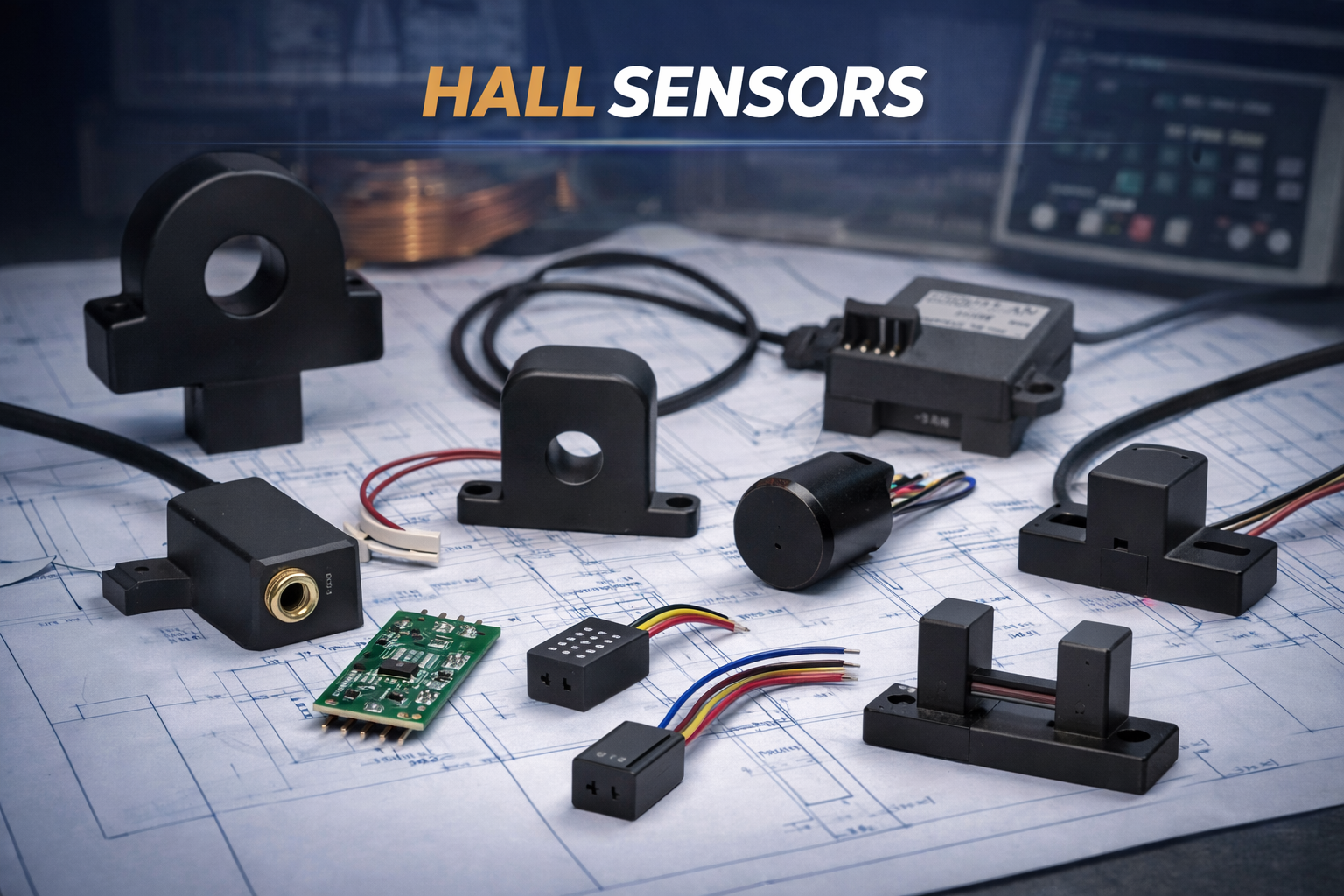
Linear Hall Sensors: Measure the strength of magnetic fields continuously.
Switch (Digital) Hall Sensors: Detect the presence or absence of a magnetic field.
Current Sensors: Monitor electric current flow in circuits.
Magnetic Encoder Sensors: Used for position and speed sensing in motors.
Automotive: Wheel speed detection, motor control, and position sensing.
Industrial: Robotics, conveyor systems, and automation.
Consumer Devices: Smartphones, laptops, and wearable electronics.
Hall sensor technology is rapidly evolving, driven by demands for higher precision, smaller form factors, and smarter integration across modern electronics.
Hall sensors have been reduced to small sizes allowing them to be installed in minute gadgets. This can be applied to such devices as IoT devices, wearables, and miniature electronics. The less power-consuming, smaller sensors are also easier to incorporate into various designs.
These sensors can now be compatible with microcontrollers and AI systems. It implies that they may be applied in autonomous automobiles, intelligent motors and factory automation. They assist systems in tracking objects in real-time and anticipating issues before they occur.
Even the weakest magnetic fields are detected by new Hall sensors. This is significant in the fast motors, robots and tools, which require extremely accurate measurements. Higher accuracy improves overall system performance.
Modern Hall sensors can withstand high temperatures, dust, and water. This renders them ideal for vehicles, aircrafts, and factories. High-quality and robust sensors are more durable, eliminating the need for frequent repair or replacement.
Hall sensors are gaining application in an increasing number of fields, and are therefore significant to contemporary technology. They are used to regulate motors, determine the speed of the wheels, and identify positions in self-driving cars and electric cars. They are also applied in wind turbines and solar panels used to monitor the energy systems.
Hall sensors are used to measure the speed and positions in factories and in robots. They can also be found in everyday gadgets such as smartphones, laptops, and wearables. Hall sensors are becoming important to smarter and more connected systems due to these new uses.
Future Hall sensors will become smarter, more energy-efficient, and integrated with AI and IoT for proactive maintenance and real-time monitoring. Multi-axis magnetic sensing will enable them to sense positions and moves better even in complicated systems.
Concurrently, power efficient designs will lessen power consumption in battery operated gadgets and will be suitable in wearables, EVs, drones, and aerospace. The innovations will ensure that Hall sensors become an important component of the future generation of connected and intelligent technologies.
Despite remarkable advancements, Hall sensors face technical hurdles—but these challenges open doors to exciting opportunities in EVs, automation, and connected devices.
Noise from surrounding electronic elements.
Miniaturization limits sensor effectiveness.
Maintaining cost-effectiveness without compromising quality.
Globalization of EVs, robotics, smart devices and industrial automation.
Implementation of sensors with AI improvements in predictive maintenance.
More demand for compact, durable, and energy efficient devices.
The latest electronics innovation is in Hall sensor technology. Its addition to smart systems, EVs, robotics and consumer devices highlights its increased significance. The companies that will exploit Hall sensors will have a competitive advantage in terms of accuracy, efficiency, and dependability.
We are the proponents of the use of high-tech Hall sensor solutions at LeedyTech to make industries smarter and more connected.
Q1: What is the primary function of a Hall sensor?
Hall sensors detect magnetic fields and convert them into electrical signals for monitoring or control applications.
Q2: Where are Hall sensors commonly used?
They are widely used in automotive, industrial automation, robotics, and consumer electronics.
Q3: How do Hall sensors benefit electric vehicles?
They provide precise motor control, wheel speed detection, and position sensing, improving efficiency and safety.
Q4: What are the latest trends in Hall sensor technology?
Miniaturization, AI integration, improved sensitivity, and enhanced environmental durability.
Q5: Are Hall sensors suitable for wearable devices?
Yes, compact and energy-efficient designs make them ideal for wearables and IoT applications.


