Notifications

7 minutes, 18 seconds
-16 Views 0 Comments 0 Likes 0 Reviews
Reliable communication devices are vital in many fields and professions, including law enforcement, emergency response, construction, security, and outdoor activities. Most professionals in these fields use two-way radios for continuous communication. However, simply having a radio isn't enough — the way it is carried and secured plays a major role in accessibility, safety, and effectiveness.
When choosing how to carry a two-way radio, two of the most common options are a radio clip and a belt mount. Both solutions are designed to keep communication devices secure while allowing quick access when needed. Understanding the differences between these two options can help users choose the most effective setup for their daily operations.
This guide explores the benefits, limitations, and best use cases for radio clips and belt mounts so you can select the right communication gear for your needs.
Professionals using the radio are usually in dynamic and physically demanding situations. In such cases, the radio can slip out of the pocket, fall, or become difficult to access in critical situations if it is not mounted correctly. A correctly mounted radio offers
Quick and easy access to critical communication
Prevents damage from accidental drops
Hands-free convenience
More organization of gear
Choosing the right mounting option ensures that communication tools remain accessible and secure throughout the workday.
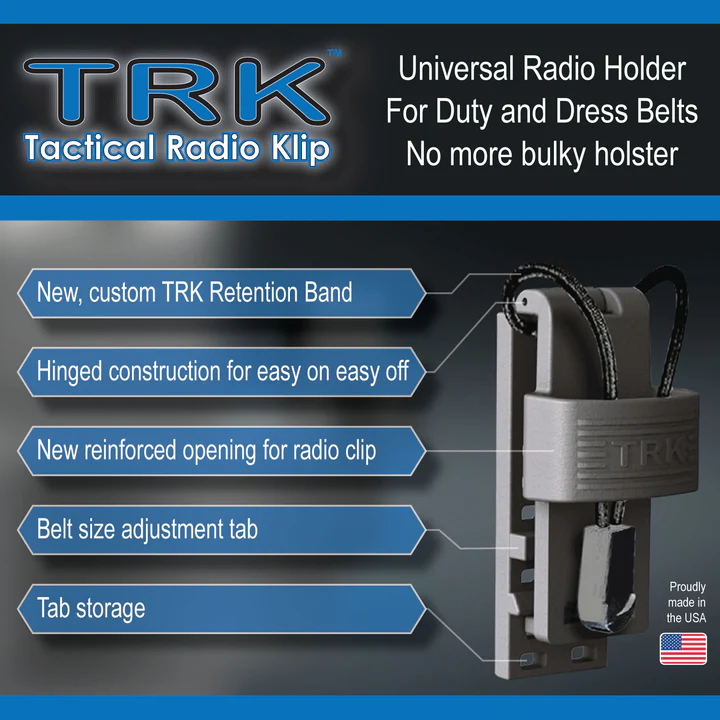
A radio clip is a compact attachment that connects directly to the back of a two-way radio. It typically slides onto belts, pockets, vests, or tactical gear, allowing the user to carry the radio without needing a separate holder.
Radio clips are widely used because they provide a simple, lightweight, and effective way to keep communication devices near at hand.
Quick Access
One of the biggest benefits of using a radio clip is easy access.
Lightweight Design
Radio clips are generally small and lightweight, adding minimal bulk to the user's gear.
Flexible Placement
Clips allow users to attach radios to different parts of their apparel or equipment. Whether on a belt, tactical vest, pack strap, or pocket, the clip provides flexibility in placement.
A belt mount, also known as a belt holster or radio holder, is a dedicated carrying system that attaches to a belt and holds the radio securely inside a pouch or case.
These mounts are designed to provide additional protection and stability compared to simple clips.
Maximum Security
Protection from Damage
Stable Positioning
Professional Gear Organization
The bulkiness of belt mounts creates a disadvantage that users experience when they try to use the devices. The devices base their operation on belt mounting because their design restricts radio placement to that specific location.
The process of detaching a radio from its belt mount requires more physical effort than the process of detaching a radio from a clip, which allows users to slide the device directly off.
Users should evaluate multiple elements when they need to choose between radio clips and belt mounts. The radio clip system enables users to access their devices more quickly because users can perform one-handed radio operations. The device remains protected by belt mounts, but users need to spend extra time to execute device removal from these mounts. The system provides better device security through belt mounts, which deliver strong retention capabilities that protect equipment in environments with high physical demands, such as tactical missions and rescue operations.
The light and non-bulky design of the clips allows users to wear them comfortably during extended work periods. Users who need to carry equipment will experience additional weight from belt mounts, which offer a system for carrying that maintains better order of their items. The right option for users' needs needs to be determined through an evaluation of their work duties and their personal choices.
Different professions may benefit from different mounting solutions.
Law Enforcement and Security
Additionally, duty belts may be equipped with belt mounts that keep the radios firmly in place during critical situations. However, some officers may prefer clips.
Individuals whose work involves constant movement from one point to another may find the radio clips useful since they can be placed anywhere on the belt or in the pocket.
Firefighters and emergency response officers may prefer the belt mounts since they can be secured firmly in place, especially when the situation demands physical movement.
Individuals such as hikers, hunters, and guides may find the clips useful since they can be carried anywhere.
It is essential to understand the demands of your working environment and determine the best mounting system that will be useful.
Regardless of which mounting system you choose, quality matters. Poorly designed clips or mounts can fail under pressure, potentially damaging expensive communication equipment.
Two-way radios are essential in communication across many industries and fields. The security and accessibility of two-way radios can be very important in terms of effectiveness and response time.
Companies such as Tactical Klips focus on providing durable mounting solutions for two-way radios to professionals and individuals who need reliable two-way radio accessories.


