Notifications

13 minutes, 12 seconds
-29 Views 0 Comments 0 Likes 0 Reviews
There is a reason why interior designers consistently return to the concept of the feature wall when a room needs visual impact without a complete overhaul. A single wall, treated with intention and creativity, has the power to anchor an entire space, drawing the eye and establishing a mood that radiates throughout the room. Accent wall molding kits have become the tool of choice for achieving this effect because they deliver maximum drama with minimum complexity. Rather than covering every surface with architectural detail, these kits allow you to concentrate your efforts on one carefully chosen wall, transforming it into a focal point that elevates everything around it. The concept is brilliantly simple: select the wall that naturally draws attention, perhaps the one behind your bed or sofa, or the first wall you see when entering a room, and use molding to give it presence and personality. What follows is a transformation that feels both dramatic and intentional, as though your home always possessed this architectural feature and you simply uncovered it.
Understanding why feature walls work so effectively requires a brief exploration of how our eyes and brains process interior spaces. When you enter a room, your gaze naturally seeks a point of focus, something that anchors the visual field and provides context for everything else. Without a clear focal point, the eye travels restlessly around the space, never quite settling, and the room can feel unsettled even when filled with beautiful objects. A well-executed accent wall satisfies this visual need immediately, providing a destination for the gaze and a foundation upon which the rest of the room can build. The molding itself adds another psychological layer through the human preference for order and pattern. Our brains are wired to find satisfaction in repeated shapes and consistent spacing, which is why geometric molding arrangements feel inherently pleasing. The dimensional quality adds further depth, creating shadows that change throughout the day and keeping the wall visually engaging over time. This psychological foundation explains why accent walls work across diverse design styles, from minimalist to maximalist, the underlying human response to focused visual interest remains constant.
The success of your accent wall project depends significantly on choosing the right wall to feature, a decision that rewards thoughtful consideration rather than arbitrary selection. Begin by identifying the wall that naturally draws attention when you enter the room, often the one opposite the main doorway or the wall behind the primary seating area. In bedrooms, the wall behind the bed almost always serves as the logical choice, providing a backdrop for sleeping and waking that sets the room's tone. In living rooms, the wall hosting your sofa or media console typically offers the most potential, as it frames the activities that occupy most of your time in that space. Consider also how light interacts with different walls throughout the day. A wall that receives dramatic morning or afternoon sun can become a constantly changing canvas as shadows move across your molding installation. Avoid walls interrupted by multiple doors, windows, or awkward architectural features that would compete with your design rather than complement it. One clean, uninterrupted expanse provides the ideal canvas, though thoughtful design can also incorporate existing elements in ways that feel intentional rather than compromised.
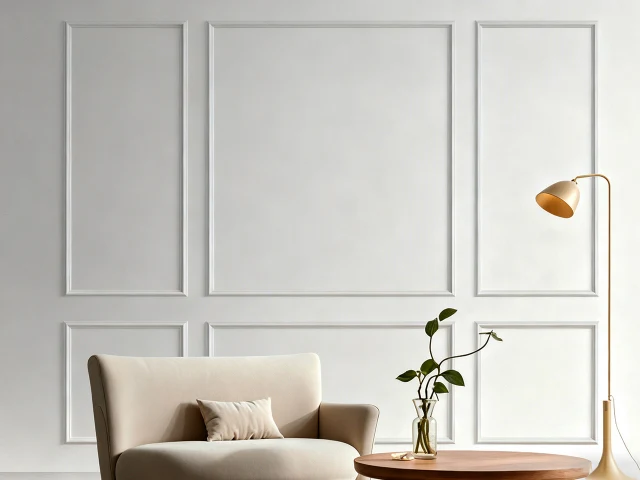
The range of design possibilities with accent wall molding kit extends far beyond the traditional grid patterns that first come to mind, offering creative freedom to match any aesthetic sensibility. For those drawn to contemporary minimalism, consider asymmetrical arrangements that create dynamic visual interest without overwhelming the space. A single large panel framed by narrower vertical elements can establish modern sophistication with restraint. Traditionalists might prefer classic raised panel configurations that evoke historic homes, with proportions derived from centuries of architectural refinement. Geometric patterns have gained tremendous popularity in recent years, with hexagons, diamonds, and intersecting lines creating feature walls that read as art as much as architecture. Some designers even use molding to create the illusion of built-in furniture, framing the area behind a console table or defining the space where a bed sits. The scale of your design matters enormously, with larger patterns suiting spacious rooms and more intricate arrangements fitting intimate spaces. Your chosen kit should offer flexibility to customize these elements, allowing you to translate your vision into reality without struggling against the limitations of the system.
Installing an accent wall molding kit follows a logical progression that rewards patience during the setup phase and delivers satisfaction as the design emerges. Begin by marking the boundaries of your installation, using a level to establish perfectly plumb and horizontal reference lines that will guide every piece you place. The first pieces establish the outer frame of your design, creating a container within which the remaining elements will reside. From there, you typically work from the center outward or from one side systematically across the wall, depending on your specific design. The adhesive on quality kits grabs quickly but allows just enough working time to nudge pieces into perfect alignment before the bond becomes permanent. As each piece goes up, your design becomes more visible and the momentum builds. Corner blocks or pre-cut angles eliminate the stress of fitting intersections, with each joint designed to come together cleanly. Within hours, what began as a bare wall transforms into a dimensional composition that already feels like a permanent part of your home's architecture. The speed of this transformation, visible in real-time as you work, provides motivation to continue and confidence that your efforts are producing exactly the effect you envisioned.

The painting phase of your accent wall project represents the moment when your installation truly comes alive, and the approach you choose fundamentally shapes the final effect. The classic technique involves painting the entire wall, molding and all, in a single color that allows the dimensional qualities to create interest through shadow and light rather than contrast. This unified approach feels sophisticated and contemporary, with the molding reading as texture rather than separate elements. For more dramatic impact, consider painting the recessed areas within your molding panels a deeper shade than the surrounding frame, creating visual depth that draws the eye inward. Some designers even embrace three-color schemes, with the outermost trim in one shade, the panel fields in another, and the wall beyond the molding in yet another. The sheen of your paint matters as much as the color, with flat finishes on wall areas making trim pop when finished in satin or semi-gloss. Whichever approach you choose, quality paint and careful application make the difference between good results and exceptional ones. Take time with cutting in, use quality brushes that hold their shape, and apply two thin coats rather than one thick one for that smooth, professional finish that makes your accent wall look like it was always there.
A successful accent wall does not exist in isolation but rather enters into conversation with everything else in your room, supporting and being supported by furniture, textiles, and accessories. The relationship between your wall treatment and the pieces placed against it deserves particular attention. A sofa positioned against a paneled wall looks best when its proportions relate thoughtfully to the molding pattern behind it. Artwork hung within panel frames should respect the boundaries created by the molding, either fitting comfortably within a single panel or deliberately spanning multiple panels in a way that feels intentional. The colors you've chosen for your wall influence everything else in the room, with the molding providing either harmonious background or striking contrast depending on your goals. Lighting plays a crucial role in this integration, with picture lights, sconces, or directional cans emphasizing the dimensional qualities of your installation and connecting it to the room's illumination scheme. Take time after installation to experiment with furniture placement and accessory arrangement, discovering the configurations that make your feature wall and your furnishings enhance each other most effectively. This experimentation transforms a decorated wall into an integrated room where every element supports the whole.
One of the underappreciated pleasures of a well-executed accent wall lies in how it continues to reward you through changing seasons and evolving decor. As natural light shifts throughout the year, with winter sun low and dramatic and summer light high and bright, your molding installation reveals different faces to match the mood of each season. The shadows that play across the panels in December differ entirely from those in June, keeping the wall visually fresh without any effort on your part. When you grow tired of your current color scheme or decide to refresh your furnishings, the accent wall provides a stable foundation that adapts to whatever changes you make. A new sofa in a different style gains context from the architectural backdrop. A revised color palette elsewhere in the room can either harmonize with or intentionally contrast against your feature wall. The durability of modern molding materials means this ongoing relationship requires no maintenance, no tightening of loose joints, no refreshing of faded finishes. Your accent wall simply continues doing its job year after year, anchoring your space and providing the visual focus that makes rooms feel complete, while you enjoy the freedom to change everything else around it as your tastes evolve.


