Notifications

8 minutes, 41 seconds
-479 Views 0 Comments 0 Likes 0 Reviews
Artificial grass has become an increasingly popular choice for dog owners seeking a clean, durable, and low-maintenance outdoor solution. Unlike natural lawns that can quickly turn muddy, patchy, or smelly from dog use, artificial turf provides a consistent surface that stands up to frequent potty breaks and energetic play. However, to get the full benefits of artificial grass for dogs, proper installation is essential. From drainage and base preparation to choosing pet-friendly materials, installing artificial grass correctly can make all the difference in hygiene, comfort, and longevity.
This article outlines key artificial grass installation tips specifically tailored for dog owners.
The first and most important step is selecting the right type of artificial grass. Not all synthetic turf is designed with pets in mind.
Look for permeable backing: Pet-friendly turf has a fully permeable backing that allows urine to drain quickly through the grass.
Short to medium pile height: Turf with a pile height between 25–35 mm is ideal for dogs, as it is easier to clean and less likely to trap waste.
Non-toxic materials: Ensure the grass is made from pet-safe, non-toxic materials to prevent health risks if dogs chew or lick the surface.
Antimicrobial options: Some turf includes antimicrobial technology that helps reduce bacteria and odors, which is especially useful for households with multiple dogs.
Choosing the right product upfront reduces maintenance issues later.
Drainage is the most critical factor in artificial grass installations for dog owners. Without proper drainage, urine can pool, leading to strong odors and bacterial buildup.
Install a well-draining sub-base: A compacted base made of crushed stone or decomposed granite allows liquids to flow away from the surface.
Slope the area slightly: A gentle slope (1–2%) ensures liquids naturally move away from the grass rather than collecting underneath.
Avoid impermeable surfaces: If installing over concrete, consider adding a drainage layer or perforated underlay to help urine flow away.
Excellent drainage keeps the surface dry, odor-free, and hygienic.
Skipping proper ground preparation is one of the most common mistakes in artificial grass installation.
Remove existing grass and soil: Eliminate organic material that could decompose and create odor problems.
Compact the base layer: Compact the sub-base thoroughly using a plate compactor to prevent sinking or uneven spots.
Install a weed barrier: A geotextile weed membrane prevents weeds from growing through the turf while still allowing drainage.
A solid foundation ensures the artificial grass remains smooth, safe, and long-lasting for dogs.
For dog owners, especially those with multiple pets, odor control is essential.
Zeolite infill: Zeolite is a natural mineral that helps absorb ammonia odors from dog urine.
Pet deodorizer layers: Some installers add deodorizing layers beneath the turf to neutralize odors before they develop.
Avoid sand-only infill: While sand works well structurally, it does little to control odor. A pet-friendly infill blend is a better choice.
These extra layers can significantly improve long-term freshness.
Dogs love to run, dig, and explore, so securing the turf edges is crucial.
Use edging materials: Install bender board, aluminum edging, or concrete curbing to keep turf edges firmly in place.
Nail or glue edges securely: Galvanized nails or turf adhesive prevent lifting and shifting.
Bury edges where possible: Slightly burying the edges discourages digging and chewing.
Proper edge installation prevents damage and keeps dogs from pulling up the turf.
Comfort and safety matter, especially for puppies and senior dogs.
Install underlay padding: Foam or rubber shock pads beneath the turf reduce impact during play and protect joints.
Improve traction: Padding helps prevent slipping, particularly during high-energy activity.
Enhance durability: Padding reduces wear on the turf fibers, extending the life of the grass.
This step is especially valuable for large breeds or highly active dogs.
Artificial grass can become warm in direct sunlight, so planning for temperature control is important.
Choose lighter-colored turf: Lighter shades absorb less heat than darker ones.
Ensure airflow beneath the turf: Good drainage layers allow heat to dissipate more effectively.
Provide shade: Install shade structures, trees, or umbrellas to create cooler resting areas for dogs.
Rinse during hot days: A quick spray with water can instantly cool the surface.
Heat-conscious installation improves comfort and safety during warmer months.
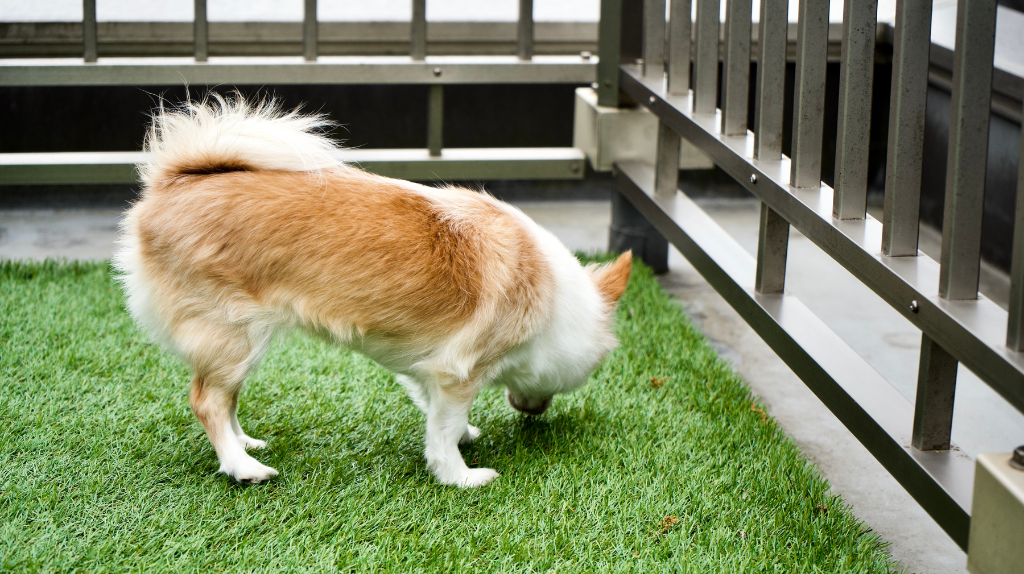
Creating a designated potty area helps maintain hygiene and simplifies cleaning.
Install turf in a specific zone: This trains dogs to eliminate in one area, reducing wear on the rest of the lawn.
Use signage or visual cues: Dogs quickly learn routine when guided consistently.
Plan easy access: Ensure the potty area is easy to reach for frequent use, especially for puppies or senior dogs.
Designated zones make maintenance faster and more efficient.
Even the best installation needs regular upkeep.
Ensure hose access: Position the turf near a water source for easy rinsing.
Leave space for drainage flushing: Make it easy to flush water through the drainage system periodically.
Brush fibers occasionally: A stiff broom keeps fibers upright and prevents matting in high-use areas.
Good planning reduces effort and keeps the lawn looking fresh.
Dog owners should carefully consider whether to install artificial grass themselves or hire professionals.
DIY installation: Suitable for small areas or temporary setups, but requires careful attention to drainage and base preparation.
Professional installation: Ideal for larger yards or households with multiple dogs. Professionals ensure proper slope, drainage, and odor control systems.
While professional installation costs more upfront, it often saves money and maintenance headaches in the long run.
Artificial grass is an excellent solution for dog owners—but only when installed correctly. By choosing pet-friendly turf, prioritizing drainage, securing edges, and incorporating odor-control features, you can create a lawn that stays clean, safe, and durable year-round. Proper installation not only improves hygiene and reduces odors but also provides a comfortable, reliable outdoor space where dogs can play, relax, and relieve themselves without damaging the lawn.
With thoughtful planning and attention to dog-specific needs, artificial grass becomes more than a landscaping choice—it becomes a long-term investment in your pet’s comfort, health, and happiness.