Notifications

11 minutes, 57 seconds
-5 Views 0 Comments 0 Likes 0 Reviews
Cufflinks are one of those small details that quietly separate a well-dressed man from the rest. They’re subtle, classy, and timeless—yet many men either don’t know what cufflinks are or aren’t sure how to wear them properly. If you’ve ever wondered whether custom cufflinks are still relevant, how to choose the right pair, or how to style them without looking overdressed, you’re in the right place.
In this complete guide, we’ll break down what cufflinks are, why they matter, the different types, how to wear them, and how to style them for modern occasions—from weddings and business meetings to formal dinners and special events.
Cufflinks are decorative fasteners used to secure the cuffs of certain dress shirts. Instead of buttons sewn onto the cuff, these shirts have buttonholes on both sides of the cuff, and cufflinks are used to hold them together.
Think of cufflinks as both functional and fashionable. They serve a practical purpose—keeping your cuffs closed—but they also act as jewelry for men, adding a refined, personal touch to an outfit.
Traditionally, cufflinks are worn with French cuff shirts (also called double cuff shirts), which have extra-long cuffs that fold back on themselves. However, some modern shirts with “convertible cuffs” also allow you to use either buttons or cufflinks.
Cufflinks date back to the 17th century, when men started moving away from ribbons and strings used to tie sleeves. Early cufflinks were simple chains or small metal fasteners. Over time, they became a symbol of status, wealth, and refinement, especially among aristocrats and businessmen.
By the 19th and early 20th centuries, cufflinks were a standard part of a gentleman’s wardrobe. They evolved in design, materials, and craftsmanship—ranging from simple silver styles to elaborate gold, gemstone, and enamel pieces.
Today, cufflinks remain a classic accessory that blends tradition with modern style. While not worn every day by most men, they’re still a go-to choice for formal wear, business attire, and special occasions.
In a world of casual dress codes and button-down shirts, you might wonder: Do cufflinks still matter? The answer is yes—maybe more than ever.
Here’s why:
They elevate your outfit instantly – Even a simple suit looks more refined with cufflinks.
They show attention to detail – Small style choices make a big impression.
They express personality – From classic silver to novelty designs, cufflinks can reflect who you are.
They’re perfect for formal and semi-formal events – Weddings, business meetings, black-tie events, and celebrations.
In short, cufflinks signal that you care about how you present yourself—and that never goes out of style.
Not all cufflinks are the same. Understanding the main types will help you choose the right pair for comfort, convenience, and style.
These are the most common and popular type. They have a small rotating bar (the “bullet”) that flips to secure the cufflink in place.
Pros:
Easy to use
Secure fit
Widely available in many designs
Best for: Everyday formal or business wear
Similar to bullet backs, but with a flat, whale-tail-shaped closure. They’re also easy to fasten and very practical.
Pros:
Simple and reliable
Comfortable to wear
Affordable
Best for: Beginners and regular use
These have a solid, non-moving back. They look sleek but can be slightly harder to put on.
Pros:
Clean, elegant look
Very durable
Best for: Dressy occasions and minimalistic style lovers
These connect the two sides with a chain, offering a classic and traditional look.
Pros:
Old-school elegance
More flexible fit
Reversible designs often look good from both sides
Best for: Vintage or classic formal outfits
These are simple, compact, and often decorative. They push through the cuff hole like a stud.
Pros:
Very elegant
Great for tuxedos and black-tie events
Best for: Ultra-formal occasions
If you’ve never worn cufflinks before, don’t worry—it’s easier than it looks.
Choose the right shirt
Make sure your shirt has French cuffs or convertible cuffs.
Fold the cuff
For French cuffs, fold the cuff back so the holes line up.
Align the holes
Make sure the holes on both sides of the cuff are properly aligned.
Insert the cufflink
Push the cufflink through both holes from the outside in.
Secure the back
Flip the toggle, lock the back, or let the chain sit naturally—depending on the type.
Adjust for comfort
Your cuffs should feel secure but not tight.
That’s it—you’re officially wearing cufflinks like a pro.
Choosing cufflinks for men isn’t just about picking something shiny. Here’s what to consider:
Business/Formal: Simple silver, gold, black, or navy designs
Weddings: Elegant, possibly with subtle details or initials
Black-tie events: Classic, minimal, or stud-style cufflinks
Casual or creative events: You can experiment with colors, patterns, or novelty designs
A good rule of thumb: Your cufflinks should complement, not compete with your outfit.
Silver or steel works with most suits
Gold pairs well with warm tones and brown shoes
Black or dark cufflinks look great with tuxedos and evening wear
Try to match metals with your watch, belt buckle, or rings
Cufflinks are one of the few places men can show a bit of flair. You can choose:
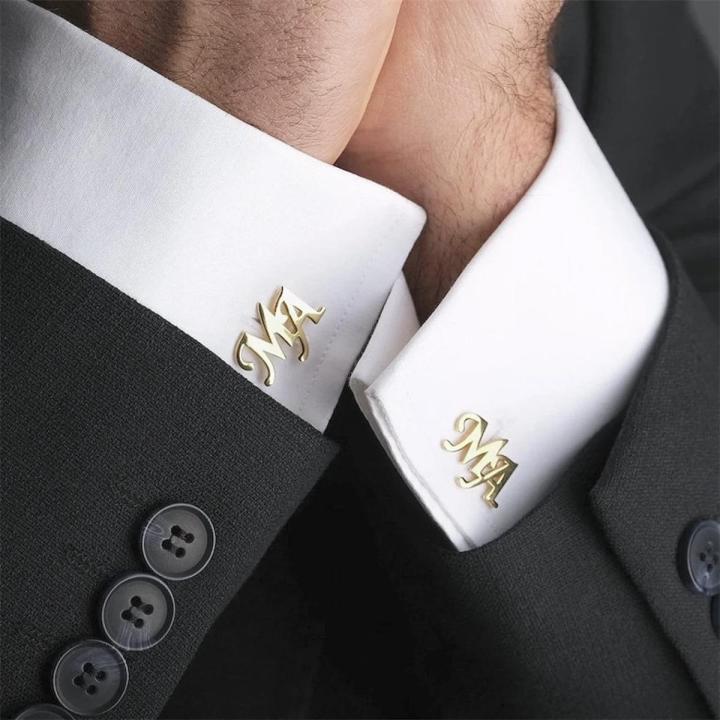
Initials or monograms
Minimal patterns
Symbolic designs
Clean modern shapes
Just remember: Keep it classy, not cartoonish, especially in professional settings.
For the office, keep things simple and professional. Choose:
Silver, steel, or dark-toned cufflinks
Clean, minimal designs
No flashy colors or oversized shapes
Pair them with a white or light blue French cuff shirt and a well-fitted suit for a sharp, confident look.
This is where cufflinks truly shine. You can go a bit more elegant:
Polished silver, gold, or pearl-style cufflinks
Subtle engravings or classic shapes
Matching with your tie clip or watch adds extra polish
If you’re the groom, custom cufflinks can even become a sentimental keepsake for the big day.
For black-tie events, stick to classic and understated styles:
Black, silver, or onyx cufflinks
Stud-style or very minimal designs
Avoid novelty or colorful pieces
The goal is timeless elegance, not standing out too loudly.
Yes, you can wear cufflinks in modern, less formal outfits—if done right.
Use convertible cuff shirts
Choose sleek, modern designs
Pair with a blazer or tailored jacket
Keep everything clean and well-fitted
This look works great for dinners, events, or stylish social gatherings.
Even great accessories can look wrong if styled poorly. Here are some mistakes to watch out for:
❌ Wearing cufflinks with the wrong shirt (no French or convertible cuffs)
❌ Choosing overly flashy or novelty designs for formal settings
❌ Mismatching metals badly with your watch or belt
❌ Wearing scratched, cheap-looking, or poorly finished cufflinks
❌ Ignoring fit and overall outfit balance
Remember: Cufflinks should enhance your look, not distract from it.
Absolutely. A good pair of cufflinks can:
Last for years (even decades)
Work with multiple outfits
Instantly upgrade your style
Serve as a signature accessory
You don’t need dozens of pairs. Start with one or two high-quality, versatile sets—for example, a classic silver pair and a darker formal pair—and build from there if you like.
Cufflinks for men may be small, but their impact is big. They represent confidence, attention to detail, and timeless style. In a world where men’s fashion often leans casual, wearing cufflinks is a quiet way to stand out—in the best possible way.
Whether you’re dressing for a business meeting, a wedding, or a formal event, the right pair of cufflinks can transform your look from ordinary to exceptional.
So if you’ve never tried them before, now’s the time. Start simple, keep it classy, and let your cuffs do the talking.


