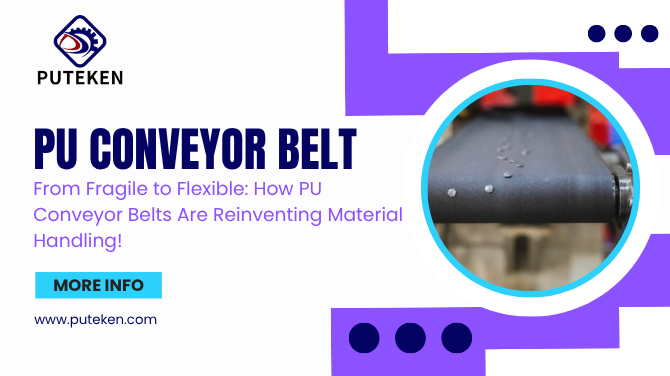
Imagine trying to move a delicate glass vase using a rough, rigid conveyor belt. Sounds like a disaster waiting to happen, right? For decades, industries have faced this kind of mismatch, using inflexible, outdated conveyor belts for handling fragile, sensitive, or high-value goods. But times have changed. Thanks to the rise of PU Conveyor Belts, we’re stepping into an era of precision, flexibility, and efficiency in material handling.
At Shanghai Puteken Transmission System Co., Ltd., this transformation is not just a trend — it’s a revolution. With innovation at the core of their products, PU conveyor belts are making waves across multiple industries, offering the perfect blend of strength, flexibility, and hygiene.
What is a PU Conveyor Belt?
PU stands for Polyurethane, a highly elastic, durable, and hygienic material. PU conveyor belts are used in a wide range of applications where traditional belts simply don’t measure up — especially in scenarios where cleanliness, wear resistance, and flexibility are key.
These belts usually consist of:
- A polyurethane top layer for contact with goods
- A polyester or fabric core for strength and flexibility
- Optional antistatic or flame-retardant coatings
Types of PU Belts Available in the Market:
- Smooth surface PU belts
- Rough-top PU belts for inclined conveying
- Profiled PU belts for sorting systems
- Perforated PU belts for drainage and drying
The Evolution of Conveyor Belt Technology
A Brief History of Conveyor Belts
Conveyor systems date back to the 1800s. The early belts were made from leather and cloth, materials that wore out quickly and were prone to damage.
Shortcomings of Traditional Conveyor Belt Materials:
- Rubber belts are heavy and degrade with heat and chemicals.
- PVC belts can crack, delaminate, and pose hygiene issues.
- Leather belts are obsolete and not ideal for modern automation.
How PU Emerged as a Superior Alternative?
PU belts brought a refreshing mix of flexibility, hygiene, and resilience — all in one lightweight package.
Key Features of PU Conveyor Belts?
- Durability and Elasticity
PU belts can bend and flex without breaking, perfect for dynamic operations.
- Lightweight but Strong
They reduce motor load while still withstanding high stress.
- Chemical and Abrasion Resistance
Ideal for industries involving oils, greases, or sharp-edged materials.
- FDA and Food-Grade Compliance
Safe for direct contact with consumables and easy to sanitize.
Applications Across Industries
PU belts are incredibly versatile and suitable for many sectors:
- Food Processing
Used in bakery lines, meat processing, and dairy handling.
- Pharmaceuticals
Maintains hygienic conditions and supports contamination-free transport.
- Packaging and Logistics
Great for high-speed sorting, labeling, and packing lines.
- Electronics and Cleanrooms
Antistatic versions are available for sensitive components.
- Textile and Printing
Handles delicate fabrics and paper products with care.
PU Belts in the Food Industry
- Hygiene and Safety
Their seamless surface prevents bacteria build-up and is easy to clean.
- Easy-to-Clean Surfaces
Can be wiped, washed, or sanitized without degradation.
- Heat and Cold Resistance
Stays stable from -30°C to +80°C, suitable for both ovens and chillers.
PU Belts in Logistics & Warehousing
- High-Speed Handling
No tearing or slipping even at peak speeds.
- Reduced Wear and Tear
Longer belt life means fewer replacements and less downtime.
- Noise Reduction
Quiet operation is a big win in modern, human-friendly warehouses.
Advantages Over PVC and Rubber Belts
- Cost-Effectiveness in the Long Run
Less maintenance, fewer replacements = better ROI.
- Environmental Impact
PU belts are more recyclable and energy-efficient to produce.
Flexibility and Customization
- Modular Designs
From widths and lengths to surface textures — tailor-made for your operation.
- Tailored Thickness and Textures
Choose your belt’s strength and grip according to product type.
- Compatibility with Automation Systems
Easily integrates into robotic or automated conveyor lines.
Maintenance and Longevity
- How PU Belts Reduce Maintenance Costs?
Their resistance to fraying, delaminating, or cracking means fewer interruptions.
- Easy Installation and Repair
Snap-fit joints and minimal tooling make replacements a breeze.
- Resistance to Delamination and Cracking
The bonded PU layers hold strong under tension and heat.
Challenges and Considerations
- Limitations of PU Belts
Not ideal for heavy-duty mining or high-heat metalwork environments.
- Choosing the Right PU Belt for Your Industry
Thickness, surface texture, color, and resistance properties all matter.
- Storage and Environmental Factors
Store in dry, cool areas to maintain optimal performance.
Future Trends in Conveyor Belt Technology
- Smart Conveyor Systems
Belts with embedded sensors to detect wear and predict failure.
- IoT Integration
Real-time tracking and remote diagnostics for smarter logistics.
- Sustainable Material Innovations
Biodegradable and recycled PU materials are on the rise.
Why Choose Shanghai Puteken Transmission System Co., Ltd.?
- Commitment to Innovation
Continuous R&D for better performance and sustainability.
- Range of PU Conveyor Belt Solutions
Flat belts, curved belts, modular belts — all customizable.
- Industry Reputation and Expertise
Serving food, pharma, logistics, and tech industries worldwide with precision.
Real-World Success Stories
- A bakery reduced belt replacement frequency by 60% after switching to PU.
- A pharma company achieved zero contamination events for 12 months.
- A textile unit increased production speed by 30% without fabric damage.
From fragile to flexible, the evolution of conveyor belts has redefined how industries handle materials. PU Conveyor Belts, particularly those offered by Shanghai Puteken Transmission System Co., Ltd., are at the forefront of this transformation. With their superior hygiene, durability, and versatility, they aren’t just a smart upgrade — they’re the future of material handling.
FAQs
1. What makes PU Conveyor Belts ideal for food-grade applications?
Their non-porous surface, ease of cleaning, and FDA compliance make PU belts perfect for hygiene-sensitive sectors like food and beverage.
2. Are PU belts suitable for high-temperature operations?
Yes, they typically perform well between -30°C and +80°C, making them ideal for cold storage and moderate heat processing.
3. How long do PU Conveyor Belts typically last?
Depending on the application, they can last several years with minimal maintenance due to their wear and chemical resistance.
4. Can PU belts be used in highly abrasive environments?
While they are abrasion-resistant, extremely harsh conditions like mining may require rubber or steel-reinforced belts.
5. Does Shanghai Puteken offer customized PU Conveyor Belt solutions?
Absolutely. They specialize in tailor-made solutions for specific industry requirements — from size and texture to color and coating.