Notifications

9 minutes, 59 seconds
-36 Views 0 Comments 0 Likes 0 Reviews
Granny is a survival horror game that delivers intense fear through simplicity, silence, and constant tension. Developed by DVloper, the game quickly became one of the most recognizable horror titles on mobile platforms. Its minimal interface, dark atmosphere, and relentless enemy create an experience that feels both classic and modern.
The main objective is straightforward: escape from a locked house within five days. However, the path to freedom is filled with danger, puzzles, hidden tools, and unpredictable threats. The central antagonist, Granny, patrols the house with sharp hearing and surprising speed. Any noise can attract immediate danger.
The brilliance of Granny lies in how it transforms a simple environment into a space of constant anxiety. There are no complex cutscenes or elaborate narratives. Instead, tension grows through sound design, level layout, and the fear of being discovered at any moment.
The foundation of gameplay in Granny revolves around stealth. Movement must be slow and calculated. Dropping an object, stepping on a creaky floorboard, or knocking over furniture can alert Granny. When noise occurs, Granny moves directly toward the source.
The player must hide under beds, inside wardrobes, or behind objects to avoid detection. Quick thinking is essential. When Granny enters a room, holding breath and remaining hidden can mean survival. Panic often leads to mistakes, and mistakes usually lead to capture.
The artificial intelligence in Granny creates unpredictable movement patterns. Sometimes Granny patrols slowly. At other times, movement becomes aggressive and direct. This unpredictability prevents the experience from becoming repetitive.
Escape requires solving multiple interconnected puzzles. Keys unlock doors. Tools open secret passages. Codes reveal hidden compartments. Each item has a specific purpose, and many are scattered throughout different floors of the house.
The challenge is not only finding objects but transporting them without making noise. Carrying an item means risking sound if it drops. Strategic planning becomes vital. Players often memorize room layouts to move efficiently.
There are multiple escape routes available. The main door requires several components to unlock. An alternative path involves a car in the garage. Each route demands exploration and careful execution.
The house in Granny acts almost like a living entity. Narrow hallways create claustrophobia. Dark corners hide potential threats. Stairs connect different levels, increasing the complexity of navigation.
Lighting is minimal. Shadows dominate most rooms. Limited visibility heightens fear because danger can appear without warning. Sound design reinforces this tension. Footsteps echo through corridors. Doors creak slowly. Silence becomes uncomfortable.
Every new attempt to escape begins with limited resources. Randomized object placement ensures that each session feels slightly different. This design choice extends replay value.
Fear in Granny does not rely on constant jump scares. Instead, it builds through anticipation. The sound of a bat hitting the floor signals failure. The heavy breathing of Granny creates dread. Even silence can feel threatening.
Headphones enhance immersion significantly. Directional sound allows players to detect movement upstairs or nearby. Listening carefully can prevent sudden capture.
Psychological tension becomes stronger as days pass. After each capture, the player loses one day. By the fifth day, failure results in complete defeat. This countdown structure increases pressure with every mistake.
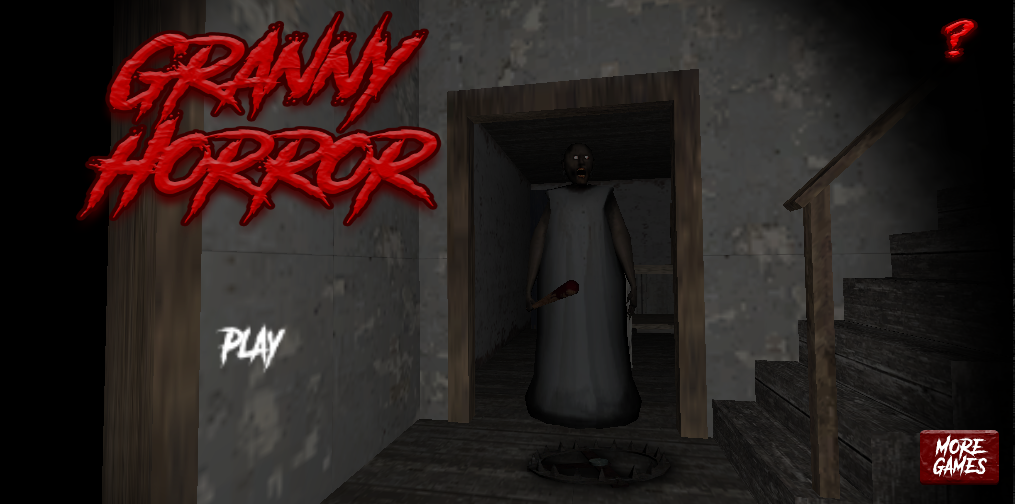
Granny is a silent but terrifying presence. Movement is slow yet relentless. The character carries a weapon and responds instantly to noise. Unlike many horror villains, Granny does not speak. Silence amplifies fear.
The design of Granny is simple but effective. Pale appearance, dark eyes, and stiff posture create an uncanny visual effect. The lack of emotional expression makes the character feel unnatural.
The universe of the game connects loosely to other titles from DVloper, including references to Slendrina. These subtle connections expand the lore without heavy storytelling.
Granny offers different difficulty levels. Practice mode removes Granny entirely, allowing exploration without threat. Easy mode reduces speed and removes certain obstacles. Normal and Hard modes increase aggression and add additional locks.
Higher difficulty requires advanced strategy. Memorizing safe spots becomes essential. Timing movement between patrol routes can create opportunities. Dropping items intentionally in distant rooms can distract Granny and clear paths elsewhere.
Experienced players develop patterns to maximize survival:
Move slowly near corners to avoid sudden encounters.
Close doors behind movement to create sound traps.
Use hiding spots strategically rather than randomly.
Learn which objects are essential early in the game.
Patience is often more valuable than speed. Rushing leads to noise. Noise leads to danger.
Granny gained massive popularity through online video platforms. Content creators recorded gameplay reactions, highlighting jump scares and tense escapes. The simplicity of design made the game accessible to a broad audience.
Mobile accessibility also contributed to success. Many horror games require high performance computers or consoles. Granny runs smoothly on most devices, expanding reach worldwide.
The minimal narrative allows players to create personal interpretations. Some view the game as pure survival horror. Others speculate about backstory and hidden lore.
The success of Granny inspired many independent developers to create similar escape style horror experiences. Simple graphics combined with strong atmosphere proved that high budget production is not always necessary for impactful horror.
The formula of stealth, puzzle solving, and relentless pursuit appears in numerous later mobile horror titles. Granny demonstrated that fear can emerge from limited mechanics when tension is carefully designed.
One of the strongest emotional triggers in Granny is the sense of constant observation. Even when Granny is not visible, the possibility of nearby presence creates anxiety. This fear reflects common human discomfort with the unknown.
Dark spaces amplify imagination. When visibility decreases, the mind fills gaps with imagined threats. The game uses this principle effectively.
Unlike action games where players fight back, Granny limits offensive capability. There are temporary ways to slow Granny, but confrontation is not the primary solution. Escape and evasion dominate strategy.
This vulnerability increases immersion. Players feel small and powerless within the environment. Survival depends on intelligence rather than strength.
Granny remains popular years after initial release. Updates and sequels expanded the universe, introducing new environments and enemies. However, the core experience remains consistent: escape under pressure while avoiding a relentless threat.
The combination of stealth mechanics, puzzle design, and psychological horror ensures lasting appeal. New players continue discovering the game, while returning players attempt more efficient escape routes.
Granny stands as a milestone in mobile horror gaming. It proves that effective fear requires atmosphere, tension, and thoughtful design rather than complex graphics. Through silence, darkness, and constant pursuit, the game creates an unforgettable survival experience that continues to influence the horror genre across platforms.
In the end, Granny is more than a simple escape game. It is a study of tension, patience, and psychological fear. Each step through the dark hallway carries risk. Each sound can mean failure. That balance between hope and danger defines the lasting power of Granny.


