Notifications

9 minutes, 5 seconds
-85 Views 0 Comments 0 Likes 0 Reviews
Choosing the right water storage solution is no longer just about capacity. Whether you own a home, manage a farm, run a commercial site, or oversee a rural property, the right system can make a major difference in long-term water security, maintenance costs, and property efficiency. With rising water concerns, unpredictable weather patterns, and a growing need for sustainable infrastructure, more property owners are investing in durable and dependable storage systems that can handle both everyday use and long-term demand.
For many buyers, concrete water tanks in Melbourne have become a preferred choice because they offer strength, durability, and long-lasting performance in a wide range of environmental conditions. But before choosing a tank for your property, it’s important to understand what makes one system better suited than another.
This guide will help you evaluate the most important factors, compare available options, and make a practical decision that supports your property’s water needs for years to come.
Water storage is not just a convenience anymore. In many areas, it is a necessity. Households want better rainwater collection systems, rural properties need reliable reserves, and commercial operations often require a stable supply for landscaping, cleaning, livestock, or emergency backup.
A well-built storage system can offer several long-term benefits:
Better water security during dry seasons
Reduced dependence on municipal supply
Lower long-term maintenance costs
Improved sustainability for homes and businesses
Added property value through reliable infrastructure
In regions where water conservation is a growing priority, strong and permanent storage systems are becoming an essential part of property planning.
Before purchasing a tank, it is important to assess your property’s actual needs. Not every solution works for every site, and the wrong choice can lead to avoidable costs later.
Start by estimating how much water your property uses on a regular basis. This may include:
Household water backup
Garden and lawn irrigation
Farm or livestock use
Commercial cleaning or processing needs
Rainwater harvesting for sustainability
For example, a small residential property may need a modest reserve for irrigation and emergency use, while a rural property may require a much larger capacity to support ongoing operations.
The location of your water storage system matters. Some properties have open space for above-ground installation, while others benefit from hidden or underground placement.
If space is limited or visual appearance is important, underground concrete water tanks in Melbourne can be an ideal option. These systems help preserve usable land area while maintaining a strong and discreet water reserve.
A heavy-duty storage solution should be built to last. This is one of the main reasons concrete remains such a popular material. Compared with lightweight alternatives, concrete offers:
High structural strength
Better resistance to weather exposure
Excellent long-term stability
Protection against external pressure and impact
Lower risk of deformation over time
Many property owners choose concrete because it can perform reliably for decades when installed correctly.
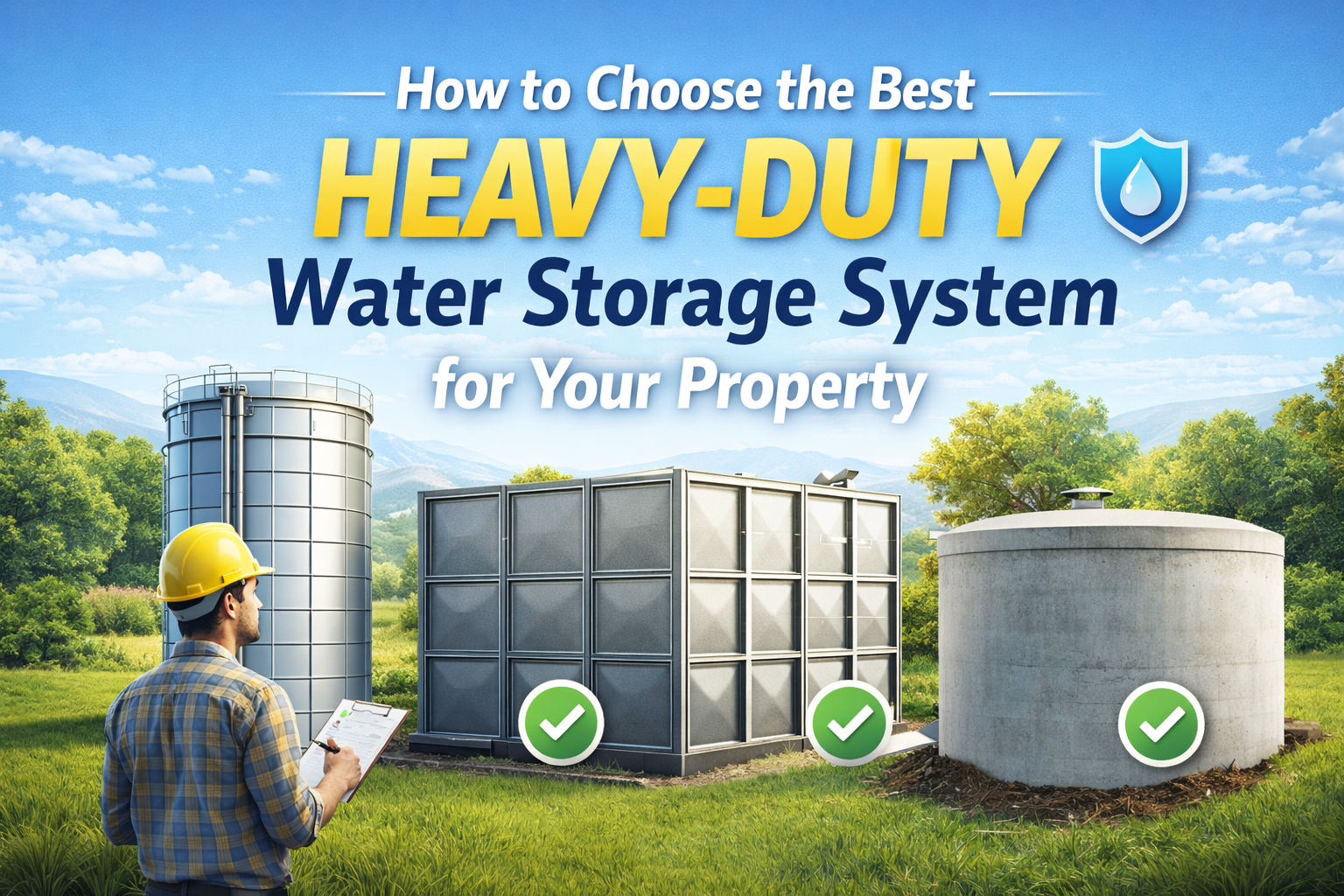
There are several types of water storage systems available, including plastic, steel, and modular options. However, concrete continues to stand out for buyers who want a robust and permanent solution.
1. Exceptional Strength
Concrete is designed to withstand heavy external loads, making it suitable for large-capacity storage and underground placement.
2. Thermal Stability
Concrete naturally helps regulate water temperature better than some lighter materials, which can be beneficial in hot conditions.
3. Long Service Life
When professionally installed, concrete systems often deliver decades of reliable performance with minimal structural concerns.
4. Suitable for Residential, Agricultural, and Commercial Use
From family homes to industrial properties, concrete systems can support a wide range of water storage needs.
This is why many property owners looking for dependable infrastructure often explore concrete rainwater tanks in Melbourne as part of a broader sustainability and water management plan.
Choosing between above-ground and underground installation depends on your property layout, budget, and usage goals.
Best for:
Easier access and inspection
Faster installation in some cases
Larger open properties
Lower excavation requirements
Advantages:
Simpler maintenance access
Often easier to expand or modify
Practical for rural or agricultural sites
Best for:
Space-saving installations
Properties with limited visible space
A cleaner and more discreet appearance
Protection from environmental exposure
Advantages:
Preserves surface area for landscaping or construction
Reduces visual impact
Strong protection when built with durable materials
If aesthetics and space efficiency matter, underground placement can be an excellent long-term investment.
Even the best storage system can underperform if installation is not handled properly. Site preparation, foundation support, plumbing connections, drainage planning, and local compliance all play a critical role in long-term performance.
That is why professional concrete tank installation in Melbourne is so important.
A qualified installation process helps ensure:
Proper site assessment before placement
Correct structural support and base preparation
Safe and compliant plumbing connections
Reduced risk of leaks or shifting
Better long-term durability and functionality
Working with experienced suppliers and installers can save you significant time and cost in the future.
If you are comparing options, keep these practical points in mind:
Match the tank size to your actual usage
Avoid overpaying for unnecessary capacity, but do not choose a system that will fall short during peak demand.
Check site access before installation
Make sure the property allows for delivery, machinery access, and safe placement.
Think about future expansion
If your property needs may grow, choose a system that can support long-term planning.
Prioritize quality over short-term savings
A cheaper system may cost more over time if it requires repairs or early replacement.
Choose a trusted supplier
A reputable provider can guide you on sizing, placement, and the most suitable system for your site.
The best heavy-duty water storage system is one that fits your property, supports your long-term needs, and delivers reliable performance year after year. Whether you need a solution for home use, agricultural operations, or commercial applications, durability and proper planning should always come first. Armstrong Water Tanks offers dependable and long-lasting water storage solutions designed to meet a wide range of residential, agricultural, and commercial needs.
Concrete remains one of the most dependable choices for buyers who want strength, longevity, and peace of mind. From above-ground systems to space-saving underground designs, the right setup can improve water security and help your property operate more efficiently.
Water Storage Solutions Concrete Tank Installation Rainwater Storage Solutions Residential Water Storage Sustainable Water Management