Notifications


7 minutes, 18 seconds
-552 Views 0 Comments 0 Likes 0 Reviews
In the digital economy, hacking is no longer limited to code, malware, or phishing emails. Modern attackers increasingly exploit something far less visible but equally powerful: wireless signals. From cellular networks and WiFi connections to GPS positioning and Bluetooth communication, businesses today operate in an environment where critical data is constantly transmitted through the air.
As hacker behavior evolves beyond traditional cyber intrusion, companies are beginning to recognize a hard truth-data protection is no longer only a software problem. It is also a radio-frequency (RF) security challenge. This shift has placed signal jammers and related RF protection technologies at the center of modern discussions about commercial and privacy security.
Wireless communication is convenient, fast, and scalable-but it is also inherently exposed. Hackers understand this better than most organizations. Instead of attacking hardened servers directly, attackers increasingly target wireless endpoints and transmission paths.
Common wireless-based hacking tactics include:
These methods often leave little digital trace, making investigations difficult and damage assessment slow. In many cases, companies only realize a breach has occurred after sensitive data has already been leaked or misused.
Most businesses invest heavily in cybersecurity software: firewalls, endpoint detection systems, encryption protocols, and access controls. While essential, these tools focus almost exclusively on data at rest and data in software environments.
What they often fail to address is data in motion over the air.
Meeting rooms, research facilities, executive offices, logistics centers, and production sites all rely on wireless communication. Mobile phones, laptops, smart devices, and IoT sensors continuously transmit data that can be intercepted or manipulated without physical access to the building.
This is where RF-based countermeasures, including cell phone signal jammer, enter the conversation-not as replacements for cybersecurity, but as complementary tools.
Signal jammers are often misunderstood as disruptive or aggressive technologies. In reality, modern jamming solutions are increasingly precise, configurable, and purpose-driven. When used responsibly and within legal frameworks, they can play a valuable role in commercial security and privacy protection.
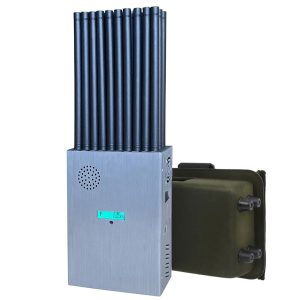
Businesses explore signal jammers to:
Unlike software defenses, signal jammers do not attempt to detect or analyze attacks-they prevent communication from happening at all within defined parameters.
Privacy is no longer just a consumer concern. For businesses, privacy breaches can lead to regulatory penalties, reputational damage, and loss of competitive advantage. Hackers increasingly exploit wireless technologies to conduct surveillance without breaching traditional IT systems.
Examples include:
In such scenarios, signal jammers help create controlled privacy environments, ensuring that sensitive discussions and activities remain offline and inaccessible to external observers.
Data protection regulations emphasize confidentiality, integrity, and availability. While encryption protects data content, it does not prevent attackers from:
By limiting or disabling wireless transmissions in high-risk situations, signal jammers reduce the attack surface that hackers rely on. This approach aligns with the principle of data minimization-if data cannot be transmitted, it cannot be intercepted.
https://www.thejammerblocker.com/wifi-bluetooth-camera-jammer-blocker/
Across industries, organizations are reevaluating their wireless exposure:
In each case, signal jammers function as part of a layered security strategy rather than a standalone solution.
As companies navigate this complex security landscape, reliable information becomes essential. TheJammerBlocker.com provides insight into RF security concepts, signal jamming technologies, and practical approaches to protecting wireless environments.
By helping organizations understand how hackers exploit wireless channels-and how signal control technologies work-TheJammerBlocker.com supports informed decision-making in commercial security and privacy protection.
https://www.thejammerblocker.com/uhf-vhf-lojack-rf-jammer/
Hacker behavior continues to evolve, and so must business security strategies. In a world where data moves invisibly through the air, protecting digital assets requires more than software defenses alone.
Signal jammers represent a growing acknowledgment that commercial security, privacy safety, and data protection extend beyond networks and servers into the RF domain. When used responsibly, they offer businesses a powerful way to reduce wireless exposure, limit hacker opportunities, and regain control over the invisible infrastructure that underpins modern operations.
In the end, protecting data means protecting every path it can travel-including the air itself.


