Notifications

9 minutes, 7 seconds
-14 Views 0 Comments 0 Likes 0 Reviews
You know how some habits sneak into your life so quietly that you don’t even notice at first?
That’s exactly how Sudoku got me.
At the beginning, it was just something to fill awkward gaps in my day. Waiting for food at a restaurant. Sitting on a train with spotty internet. Avoiding emails I didn’t feel like answering. I’d open a puzzle app, tell myself I’d solve one quick grid, and then get back to “real life.”
Except… it was never just one.
Somehow, 15 minutes would disappear. Then 30. And I’d be sitting there, staring intensely at a 9x9 grid like I was decoding a secret government message.
And the funniest part? I genuinely enjoyed it.
I’ve tried meditation before. I’ve tried journaling. I’ve even tried those “deep breathing for productivity” videos.
But nothing clears my mind quite like Sudoku.
When I’m solving a puzzle, everything else fades away. Deadlines? Background noise. Notifications? Ignored. My brain locks into one mission: figure out where that missing number belongs.
It’s oddly peaceful.
There’s something comforting about rules that don’t change. Each row must contain numbers 1 through 9. Each column must do the same. Each 3x3 box follows the exact same logic.
No surprises. No plot twists. Just structure.
In a world that feels chaotic and unpredictable, that structure feels like a warm blanket.
I remember this one evening vividly. It had been a long day, and I thought solving a puzzle would help me unwind. I confidently selected one labeled “Very Hard.”
Big mistake.
For the first 20 minutes, I made almost no progress. Every square I examined seemed to have at least three possible numbers. I filled in tiny pencil notes everywhere, turning the clean grid into a chaotic mess of miniature digits.
At one point, I got so frustrated that I closed the app dramatically.
“I don’t need this stress,” I told myself.
Ten minutes later, I reopened it.
That’s when I realized something important: I wasn’t frustrated because I hated it. I was frustrated because I cared. I wanted to crack it.
So I slowed down.
Instead of scanning randomly, I focused on just one 3x3 box. I carefully checked each number against its row and column. I eliminated possibilities one by one. It was slow. Painfully slow.
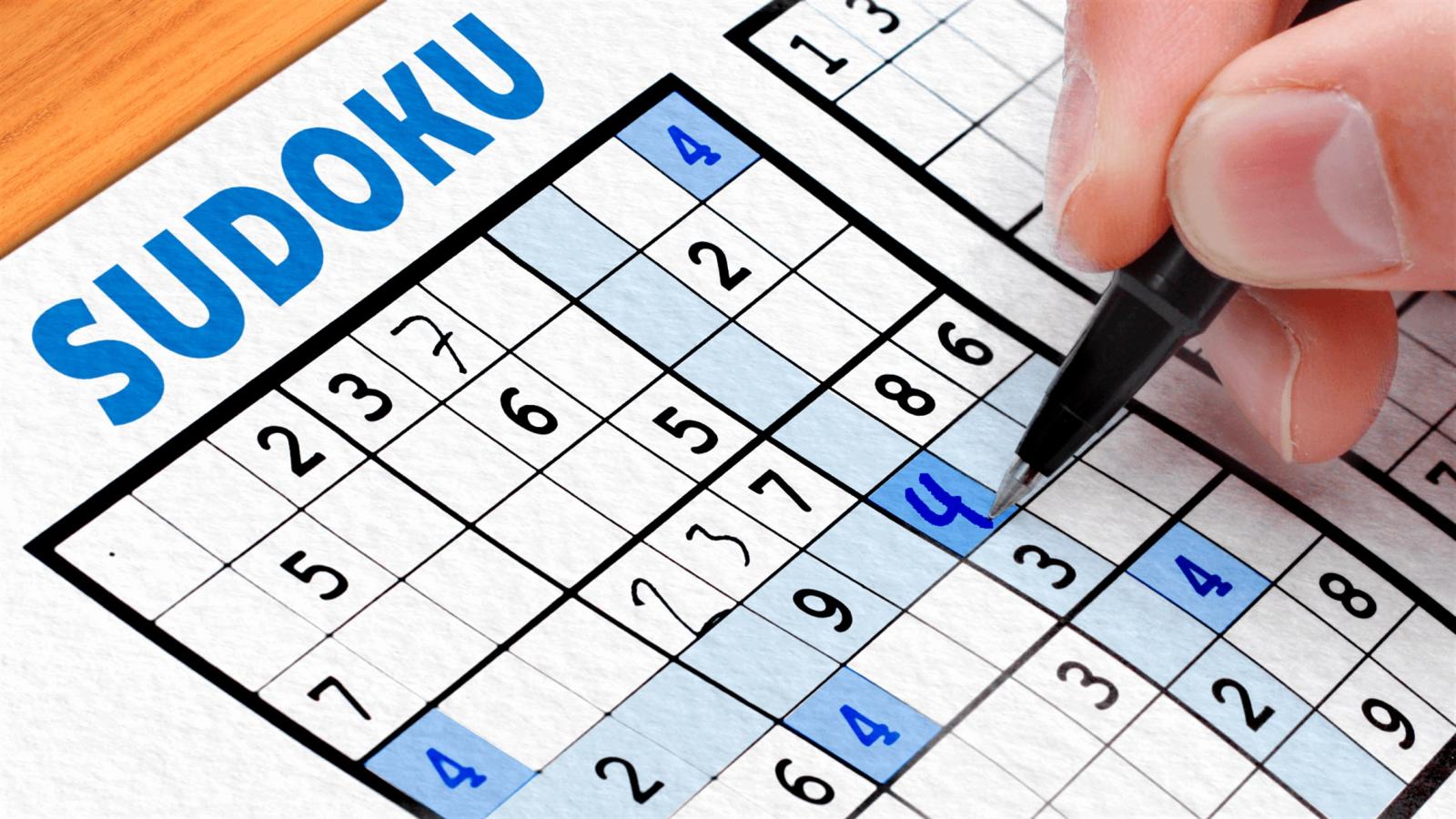
But then I found one square that could only be a 4.
That single 4 triggered a domino effect.
Suddenly, another square made sense. Then another. And within 15 minutes, the once-impossible grid was complete.
I actually raised my hands like I had just won a championship.
Over a number puzzle.
Most modern games reward quick reactions and fast decisions. This puzzle is different.
If you rush, you lose.
If you guess carelessly, you’ll eventually trap yourself in contradictions. I’ve learned that lesson the hard way more times than I’d like to admit.
But when you approach it patiently—when you methodically eliminate options—it feels like solving a mystery.
Each number you place isn’t random. It’s earned.
And that’s deeply satisfying.
Let me confess something.
Once, after spending nearly 40 minutes on a difficult grid, I proudly admired my almost-finished board. Only two squares left.
But something didn’t add up.
I had two 8s in the same column.
How? HOW?
I stared at it in disbelief. Somewhere along the way, I had confidently placed an 8 without double-checking.
That one tiny mistake had corrupted the entire logic chain.
I had to erase half the puzzle and rebuild from an earlier point.
Was I annoyed? Absolutely.
Did I consider quitting? Briefly.
But rebuilding it was strangely empowering. I was more careful. More observant. And when I finished it correctly, the satisfaction was even stronger than usual.
Lesson learned: confidence is good. Overconfidence is dangerous.
Before diving deep, I now scan the entire grid for “obvious” placements. Even in hard puzzles, there’s usually at least one square with only one valid number.
Those early wins build momentum.
Instead of asking, “What number goes here?” I ask, “What numbers definitely can’t go here?”
Elimination narrows the field quickly.
Sometimes I focus only on rows. Other times only on columns. Breaking the grid into mental layers keeps it from feeling overwhelming.
There are moments when progress completely stops. I’ve learned not to panic during those phases. It doesn’t mean I’m stuck forever—it just means the next breakthrough requires a different angle.
People often assume this game is about math skills. It’s really not.
It’s about logical reasoning, pattern recognition, and disciplined thinking.
Since playing regularly, I’ve noticed subtle changes in how I approach problems outside the grid. When something feels complicated, I instinctively break it into smaller parts. I look for constraints. I eliminate impossibilities.
Row by row. Column by column.
It’s funny how a simple daily habit can reshape your mindset.
Early mornings.
There’s something magical about sitting by the window with coffee, sunlight slowly filling the room, and a fresh puzzle waiting to be solved.
It feels intentional. Calm. Focused.
Sometimes I finish it quickly. Other days I wrestle with it for an hour.
Either way, it feels like I’ve exercised my brain before the day even begins.
What started as a casual time-killer has become a ritual.
I don’t always play long sessions. Sometimes it’s just one puzzle before bed. But it’s enough to shift my attention away from endless scrolling and toward something that demands real thought.
Sudoku has taught me patience. It has humbled me. It has frustrated me. And it has made me weirdly proud of solving tiny grids of numbers.


