Notifications

4 minutes, 50 seconds
-69 Views 0 Comments 0 Likes 0 Reviews
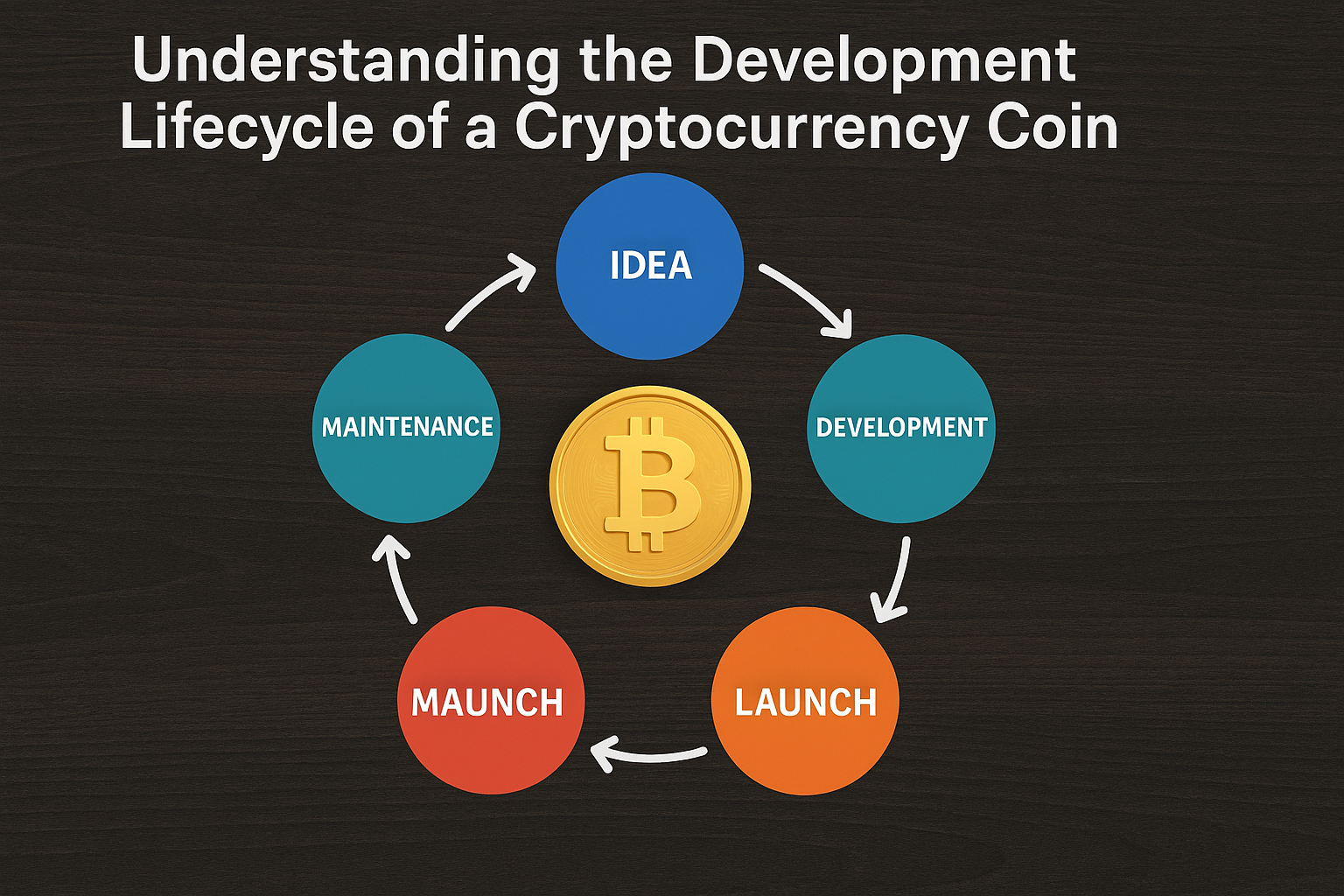
The development of a crypto coin is not a single technical task but a structured lifecycle that blends cryptography, distributed systems, token economics, and regulatory awareness. From concept to mainnet launch, each phase influences scalability, security, and long-term sustainability. Understanding this lifecycle helps businesses and developers avoid architectural mistakes that can cripple a crypto coin after deployment.
Every crypto coin begins with a clearly articulated problem statement. This stage defines why the coin should exist, what inefficiency it solves, and how decentralization adds value compared to traditional systems. Teams analyze whether the coin is meant for payments, governance, utility access, or asset representation. Market fit analysis, competitive benchmarking, and protocol selection decisions are finalized here. A weak use case at this stage often leads to low adoption regardless of technical strength.
Once the concept is validated, the underlying blockchain architecture is designed. This includes choosing between building a native chain or deploying on an existing network. Decisions around consensus algorithms, transaction throughput, and finality models directly affect performance and security.
Key technical considerations include:
Selection of consensus mechanism such as Proof of Stake, Delegated Proof of Stake, or hybrid models
Network topology design covering node distribution and fault tolerance
Scalability strategies like sharding, sidechains, or layer-2 rollups
These architectural choices define how the crypto coin behaves under real-world transaction loads.
Tokenomics determines how value flows within the ecosystem. It governs issuance, supply control, incentives, and deflationary or inflationary mechanics. Poor token economics can lead to excessive volatility or manipulation.
Important elements in this phase include:
Total supply, circulating supply, and emission schedules
Utility alignment between token usage and network activity
Incentive structures for validators, developers, and users
A well-designed economic model ensures the crypto coin remains functional and valuable over time.
This phase translates design into executable code. Core protocol logic, transaction validation rules, and governance mechanisms are implemented. Secure development practices are essential because smart contracts are immutable once deployed.
Teams often focus on modular architecture to support future upgrades. This is also where businesses may integrate Custom crypto coin development to tailor consensus rules, token behavior, or governance features to specific enterprise needs.
Before public release, rigorous testing is conducted in controlled environments. Testnets simulate real-world conditions and expose vulnerabilities without risking actual funds. External audits verify code integrity and attack resistance.
Security processes typically involve:
Static and dynamic code analysis
Penetration testing and exploit simulations
Validator stress testing under adversarial conditions
Skipping this phase can result in irreversible financial losses post-launch.
The mainnet launch marks the operational start of the crypto coin. Genesis blocks are created, validator nodes are activated, and initial token distribution occurs. Liquidity provisioning, exchange listings, and infrastructure monitoring are critical during this stage to maintain network stability.
Development does not end at launch. Continuous upgrades, governance proposals, and community engagement shape long-term success. Transparent governance frameworks allow stakeholders to vote on protocol changes while maintaining decentralization. Ecosystem partnerships, developer tooling, and documentation help expand adoption.
The development lifecycle of a crypto coin is a multidimensional process requiring technical precision and economic foresight. Each phase builds on the previous one, and shortcuts often introduce systemic risk. Teams that treat development as an ongoing lifecycle rather than a one-time build are far more likely to achieve sustainable network growth.