Notifications

8 minutes, 6 seconds
-24 Views 0 Comments 0 Likes 0 Reviews
Magic has always captured the imagination of children. The excitement of performing an impossible trick, surprising an audience, and revealing a secret illusion makes magic a fun and meaningful activity for young learners. But magic is not just entertainment. It can play a powerful role in helping children develop important life skills.
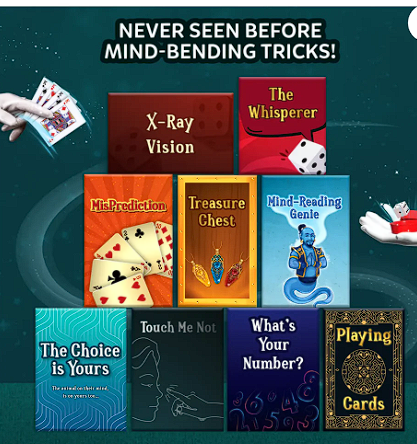
When kids practice magic tricks, they combine creativity, focus, communication, and problem solving. Tools designed for beginners make it easier for children to learn step by step and perform confidently. For example, the Skillmatics Mentalist Magic set allows kids to perform more than 50 mind-bending tricks, including predicting choices, revealing hidden words, and even making objects appear to float.
Through these activities, children gain skills that support their personal and cognitive development. A well-designed magic kit can turn learning into an exciting and interactive experience.
Magic encourages children to think differently. When they learn how illusions work, they begin to understand how simple objects and clever techniques can create surprising outcomes.
Many tricks involve creative presentation. Kids decide how to introduce the trick, how to build suspense, and how to reveal the final surprise. With tools like special cards, prediction props, and secret gimmicks, a magic kit allows children to experiment with different ideas and presentations.
This creativity often carries into other areas of learning such as storytelling, art, and imaginative play.
Performing magic requires careful attention. Every trick has a sequence of steps that must be followed correctly. If a step is missed, the illusion may not work.
Practicing magic helps children concentrate on details, remember instructions, and maintain focus throughout the performance. The Skillmatics set includes multiple props and tools that require precise handling, helping kids develop stronger concentration while performing tricks.
Over time, this improved focus can benefit children in school and daily activities.
Every magic trick is like a puzzle waiting to be solved. Children must understand how the trick works, what tools are needed, and how to perform it successfully.
Many tricks in the kit involve predicting choices, revealing secret information, or influencing what someone selects. These activities require logical thinking and planning.
As kids practice, they learn to analyze problems and think through solutions step by step. These problem solving skills can support learning in subjects such as mathematics and science.
Performing magic in front of an audience can be incredibly rewarding for children. When a trick works perfectly and the audience reacts with amazement, kids feel proud of their achievement.
Each successful performance builds confidence. A magic kit gives children the opportunity to practice multiple tricks, gradually improving their skills and stage presence.
This confidence often extends beyond magic performances. Children who feel comfortable performing tricks may also become more confident in speaking, presenting ideas, or participating in group activities.
Magic is not only about the trick itself. Presentation is equally important. A magician must guide the audience, create suspense, and reveal the final surprise in an engaging way.
When children perform tricks, they practice speaking clearly, telling a story, and interacting with others. These experiences help them develop strong communication skills.
Learning how to entertain an audience also helps children become more expressive and confident in social situations.
Many magic tricks require precise hand movements. Handling cards, controlling small props, and setting up gimmicks help children improve hand coordination.
The Skillmatics magic set includes items such as decks of magic cards, invisible thread, and other tools that require careful handling during tricks.
Practicing these movements strengthens fine motor skills, which are important for activities like writing, drawing, and crafting.
Learning magic tricks requires remembering instructions, sequences, and timing. Children must recall each step while performing in front of others.
With more than 50 tricks to learn, kids have many opportunities to practice remembering routines and refining their performances.
This constant mental exercise strengthens memory and helps develop stronger cognitive skills.
Magic naturally sparks curiosity. Children often ask questions such as “How does that work?” or “What makes this trick possible?”
As they learn the techniques behind illusions, kids begin to understand concepts like misdirection, prediction, and psychological influence. These ideas encourage curiosity and exploration.
Using a magic kit, children can experiment with tricks, try different presentations, and continuously learn new skills.
Magic tricks rarely work perfectly the first time. Children need to practice repeatedly to perform smoothly and confidently.
This process teaches patience and persistence. Kids learn that improving a skill requires time and effort. Step-by-step instructions included in the kit make it easier for beginners to learn gradually and master each trick.
These lessons about practice and dedication can benefit children in many other areas of life.
Magic is also a wonderful way to bring families together. Kids can perform tricks for parents, siblings, and friends, creating exciting moments of surprise and laughter.
With tools and instructions included in a magic kit, children can prepare mini performances at home. Each trick becomes an opportunity to entertain and connect with loved ones.
These shared experiences create lasting memories and encourage kids to keep practicing their new skills.
Magic offers much more than simple entertainment. It combines learning, creativity, and performance in a way that keeps children engaged and motivated.
From improving focus and memory to boosting confidence and communication, magic tricks support multiple aspects of a child’s growth. Kits that include cards, props, prediction tools, and step-by-step instructions make it easier for beginners to start performing and enjoying the art of magic.
When children begin practicing magic, they are not just learning tricks. They are building confidence, developing important skills, and discovering the joy of creating wonder for others.


