Notifications

15 minutes, 12 seconds
-23 Views 0 Comments 0 Likes 0 Reviews
The modern digital business world requires appropriate customer interaction management as a condition to achieve growth in the long term. Organisations can use a structured Customer Relationship Management structure to ensure they can scale the communication and remain consistent in all the customer interactions. Customer Relationship Management is vital in this. A systematic Customer Relationship Management strategy will make sure companies handle the customer journeys, manage the communication processes effectively, and constantly. An effective Customer Relationship Management system facilitates business to manage customer information, monitor the dialogues, and enhance interaction at all levels of buyer cycle.

Contemporary businesses consider Customer Relationship Management as a growth strategy and not only software. Kaarasun and other growth-oriented companies rely on Customer Relationship Management models to establish anticipated sales pipelines and enhanced customer loyalty. This easy crm definition assists amateurs to get an idea of how Customer Relationship Management enhances customer experience and business performance. This straight forward crm definition demonstrates how Customer Relationship Management transforms customer data to make them work as business insights.
What is Customer Relationship Management?
Customer Relationship Management is the strategy and technology employed by businesses in order to manage customer interaction and information. Customer Relationship Management solution is a powerful platform that links the sales, marketing and the support team together as one.
There are a lot of newcomers who use the Internet to find out what is crm or the definition of crm. In a nutshell, Customer Relationship Management assists companies in have a better understanding of their customers and enhancing their communication levels.
Why Customer Relationship Management is Important
A Customer Relationship Management platform assists companies in:
· Customers Centralize customer information.
· Improve response times
· Track is more effectively led.
· Automate follow-ups
· Improve customer retention
Companies that have made an investment in Customer Relationship Management tend to have increased sales productivity and improve client satisfaction.
Numerous companies deploy Customer Relationship Management systems with the assistance of Kaarasun.
What Does CRM Stand For?
The question many people would have is what crm means.
CRM is an abbreviation of Customer Relationship Management, and also a business strategy and a technology application that operates throughout effective managements of relationships.
Types of CRM Systems
Different business firms have the option of selecting the CRM platforms based on their requirements. A case in point is the zoho crm system that has been used to assist companies in automating pipelines, tracing leads, and enhancing the precision of reporting.
CRM solutions specific to an industry are:
· crm to hospitals to deal with communication with patients.
· crm recruitment tools are used in workflow hiring.
· car dealer customer management programs.
Crm as a hospital specific platform makes sure that Customer Relationship Management processes are aligned with industry communication requirements.
The tools used in hospitals, dealership crm, and crm recruitment platforms are various software used to tailor Customer Relationship Management processes to their interests. The choice of an appropriate Customer Relationship Management platform is based on your industry, staff, and sales ethnicity.
Key Features of Customer Relationship Management
The typical features of a powerful Customer Relationship Management
system are:
· Lead and contact management
· Sales pipeline monitoring
· Email integration
· Task automation
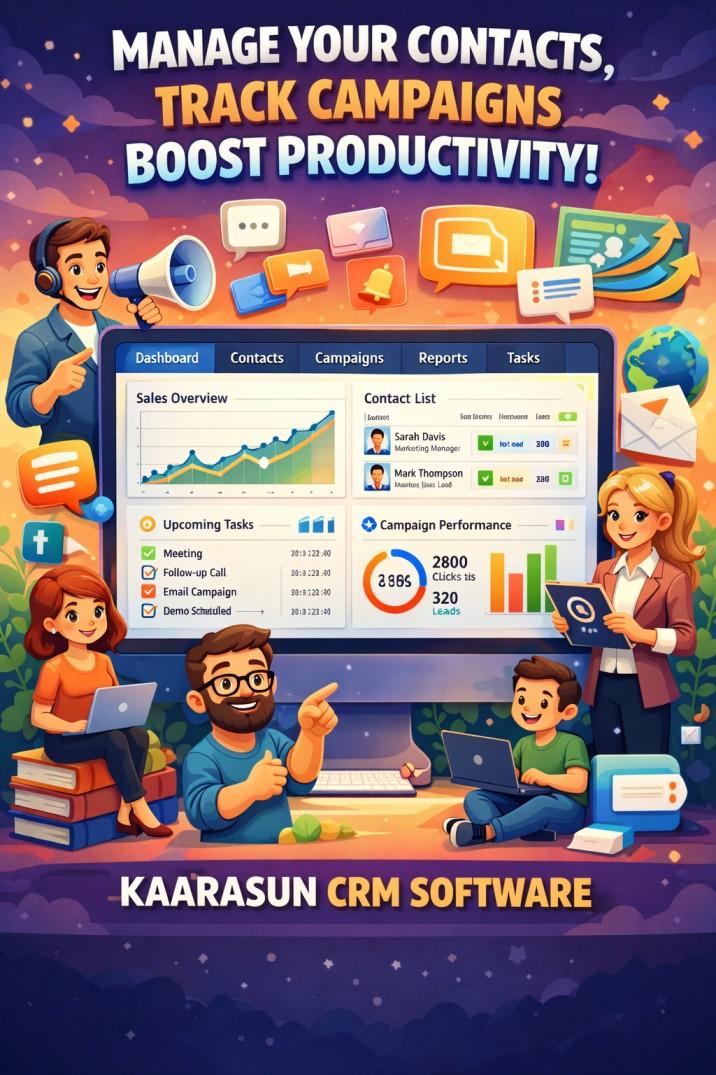
· Reporting dashboards
· Customer support tracking
Customer Relationship Management is the key to customer-focused business processes when enacted with proper consideration.
Effectively executed Customer Relationship Management system has a number of fundamental business roles when compared to contact storage. The main aim of Customer Relationship Management is to simplify customer contacts, enhance coordination of teams and enhance efficiency of a business. Customer Relationship Management, when well applied, assists in strategic decision making in the sales, marketing and customer service departments.

The major Customer Relationship Management functions are:
· Key Customer Data Management:
This approach occurs when the central dealer handles every customer response. Human Centralized Customer Data Management: This is implemented when the central dealer manages all customer responses.
Customer Relationship Management system provides a point where all information on customers is stored and through which customers can be accessed by teams in real time to retrieve their communication history, purchase history and preference.
· Sales Pipeline Tracking
Customer Relationship Management assists companies in tracking leads on the initial contact to conversion thus making sure that no sales lead is lost and the follow-ups occur in a timely manner.
· Customer Communication Management.
Using Customer Relationship Management, teams will be able to follow emails, calls, meetings, and support tickets, resulting in a unified customer experience between departments.
· Marketing Automation & Segmentation.
An effective Customer Relationship Management platform will enable companies to divide audiences, conduct specific campaigns, and gauge the performance of engagement.
· Task Automation and Workflow Management.
CRM gives rise to automated repetitive processes such as reminders, follow-ups, and notifications which reduce time and enhance productivity.
Reporting and performance insights enables the management to track performance internally and externally, along with the execution of different strategies aimed at enhancing the quality of performance at all times. Human Reporting and performance insights helps the management to monitor the performance both internally and externally, as well as the implementation of various strategies that are geared towards improving the quality of performance at all times.
Customer Relationship Management helps businesses to create reports, track KPIs, and arrive at decisions through real-time customer information.
With such functions combined, Customer Relationship Management is not just software anymore, it is an organized system that accelerates the stable business development.
Benefits of Customer Relationship Management
The adoption of Customer Relationship Management has the following quantifiable benefits:
· Higher conversion rates
· Increased customer satisfaction.
· Control Improved prediction accuracy.
· More rapid communication within the company.
· Stronger customer loyalty
Numerous expansionist firms are depending on Customer Relationship Management techniques suggested by Kaarasun. An effective Customer Relationship Management strategy also enhances the accuracy of the reporting and assists the business to come up with a quicker decision that is customer oriented. Forecasting, collaboration, and scalability of business through long-term Customer Relationship Management are also enhanced in a mature Customer Relationship Management environment.
Many businesses have CRM software installed but they fail to use it to its full extent. A proper Customer Relationship Management system should not merely maintain contacts.
First of all, Customer Relationship Management should make the entire customer experience more visible. The teams have to be capable of visualizing where the prospect is falling, the campaigns that result in the largest number of conversions and the way the customers negotiate their way up the sales funnel.
Second, Customer Relationship Management must automatize routine work. The follow-ups, reminders, email flow ought to be automated so that the individual teams may focus on relationship building instead of engaging in manual labour.
Third, Customer Relationship Management should be in a position to generate actionable insights. Real data should be used to illustrate trend, opportunities and strategic decisions made by leaders through reports and dashboards.
When effectively applied, Customer Relationship Management may be the primary operating pillar of customer-oriented organizations.
How Beginners Can Start with Customer Relationship Management
In case you are a beginner in Customer Relationship Management, then take these steps:
1. Determine your customer journeys.
2. Select the appropriate CRM software.
3. Train your team on CRM usage
4. Automate monotonous communication.
5. Measure performance periodically.
An effective Customer Relationship Management system is able to put the data about the customers together in a swift manner, and turn the data into practical insights.

The Customer Relationship Management concept is important to businesses that intend to grow sustainably. Customer Relationship Management offers a systematic way towards success over the long term, whether it is enhancing the level of customer engagement or relevant revenue predictability. Companies investing in Customer Relationship Management frameworks tend to create stronger customer pipelines and establish customer trust over a long period of time. Companies that make an early investment in Customer Relationship Management systems tend to develop more pipeline and customer lifetime value. Customer Relationship Management is not merely a tool when businesses integrate strategy, automation, and customer in sights usually with the help of Kaarasun. It becomes a growth engine.
FAQ – Customer Relationship Management
1. What is Customer Relationship Management?
Customer Relationship Management refers to a system and strategy that is employed by businesses to handle customer interactions, monitor leads and ensure better relationships in the long term. Such companies as Kaarasun
assist companies in deploying formal CRM systems to benefit customers experience and revenue predictability.
2. What does crm stands for?
Crm is an abbreviation of Customer Relationship Management, a software and business processes employed in handling customers, pipelines of sales and communication.
3. Why do businesses need Customer Relationship Management?
Customer Relationship Management system is very powerful and assists businesses in organizing contacts, automating follow-ups, increasing conversion rates, and creating a stronger customer loyalty.
4. Which industries use CRM systems?
CRM platforms are used in the following companies in different industries:
· Hospital crm-based healthcare.
· The recruitment agencies with crm recruitment tools.
· Automobile companies with dealership crm software.
The majority of developing companies implement Customer Relationship Management platforms under the professional assistance of such partners as Kaarasun.
5. What is a popular CRM software example?
The zoho crm system is one of the widely used platforms that are associated with automation capabilities, reporting functionality, and the ability to expand with the increasing number of team members.
#LocalSEO #SEOServices #SEOConsulting #SLCDigitalMarketing Affiliate Marketing Ads Adsblast Affordable SEO packages AI for SEO AI SEO guide


