Notifications

7 minutes, 21 seconds
-31 Views 0 Comments 0 Likes 0 Reviews
Jute is known as the golden fibre in India, and it is widely grown in the country. The best temperature to grow the Jute crop is 24 degree celsius to 37 degree celsius. That’s why it is mainly grown in eastern India, because the states of eastern India provide suitable climatic conditions. The names of the states, where this crop widely grows, are: West Bengal, Bihar, Assam, and Odisha. Jute is used for multiple purposes, such as ropes, bags, carpets, and packaging materials.
The farms in which Jute is cultivated on a medium-scale, farmers need a suitable engine-power tractor. For example tractor like Mahindra 475 is considered useful for field preparation, ploughing, and transporting the crops. It is a 42 HP category tractor, which can sufficiently carry the harvested Jute bundles from the farm to the market.
For gaining higher yields and returns on Jute, farmers need to follow all of the stages carefully. The crop requires a humid climate, along with the moisture-holding soil. In this article, we will read about all of the important stages for Jute farming:
The best climate for Jute farming is warm and humid. The humidity can retain the moisture level longer than any other climatic conditions. At the time of growing this crop, being particular about the climate provides you with great results. Additionally, farmers need to ensure that the farming area receives good rainfall during the growing season.
Jute can be grown in different types of soil. However, the perfect soil condition for the crop is fertile alluvial soil. This soil is rich in nutrients and has good drainage properties. Alluvial soil is commonly found in river basins and flood-affected areas. Farmers should avoid extremely sandy or heavy clay soils, because they can affect the plant growth and fibre quality.
Jute is generally sown during the pre-monsoon period, usually between March and June, depending on rainfall and soil conditions. Also, before sowing the seed, farmers need to plough the soil several times. Ploughing helps the soil to get the loosen texture, which helps in the good growth of the plant.
Farmers sow the seeds in rows and manage a proper distance between them. This practice helps the crops to have enough space to grow properly. Once the crop starts germinating, the farmer follows the thinning process.
When the crop starts growing, farmers need to manage the weeds. One should follow the regular wedding procedure that helps the plants to absorb all of the nutrients. The danger of pests and weeds is greater in Jute crops. Thus, in the growing season, farmers need to monitor the crop health.
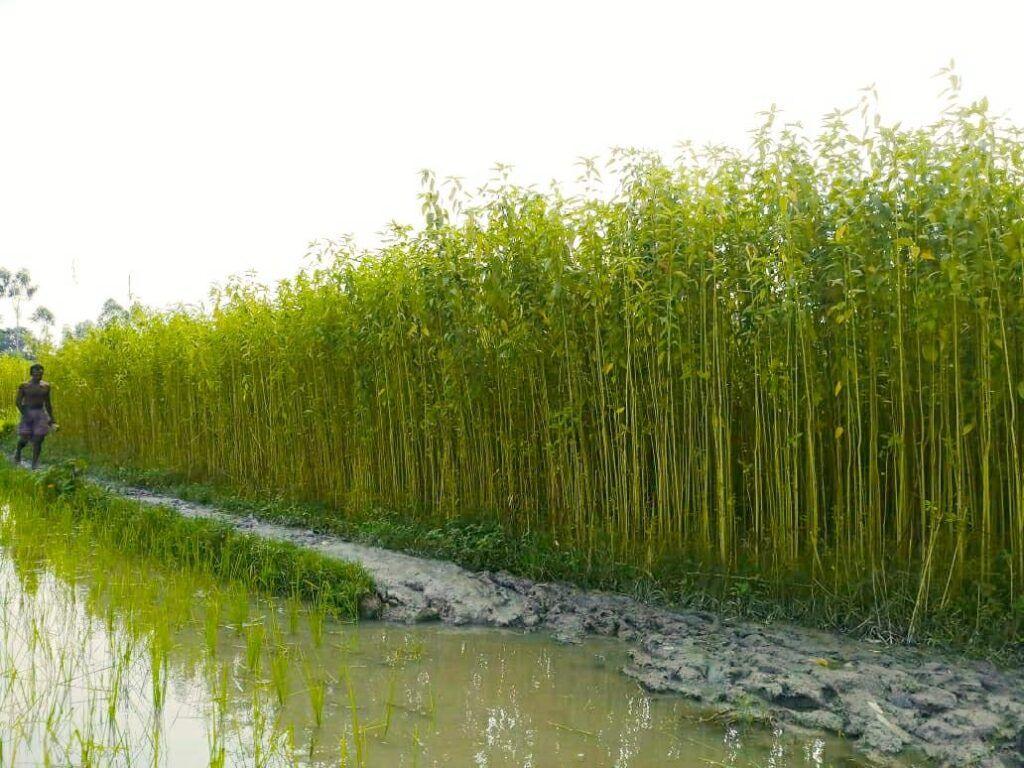
Jute crop attains a height of 8 to 12 feet within a few months. Resulting, more chances of weeds and pests along with the crop. For the removal of weeds, farmers can follow several weed management techniques. The names of the techniques are as follows:
Manual Weeding
Mechanical Weeding
Mulching
Use of Bio-Pesticides
Crop Rotation
Jute is harvested after 120 to 150 days after sowing the crop. The harvesting time can be assessed at the time when plants reach maturity, and the flowers start growing on them. The process of harvesting is slightly different for jute crops. Firstly, the crops get cut down close to the ground. Then, the harvested crop was tied into bundles and kept in the field for a few days. That time, the leaves of the crops fell naturally.
Now, the main procedure has started, where bundles are prepared for retting. Basically, in this process stem are bundled and weighted down in water. It helps in extracting the fibre from the plant stems.
When all of the process of harvesting is completed, farmers sell the raw jute fibre to the markets. Crops can be transported to local markets and jute mills, depending on the quantity of production. From there, the fibre is used to manufacture different products, such as sacks, ropes, carpets, etc.
Jute farming provides a livelihood to millions of farmers and manufacturers. Also, the crop gets exported in different sectors and contribute in rural economy. Another reason for Jute's popularity in India is biodegradable and environmentally friendly byproducts.
Traditionally, Jute farming is heavily responsible for manual labour. However, the emergence of new farming technologies has started to improve efficiency. Small to large-scale farmer owners take the support of advanced farm machinery for higher yields.
In small farms, machines such as a power tiller are used to prepare the soil. This implement helps in creating proper seedbeds before sowing jute. In contrast, large farms use cultivators, disc harrows, and rotavators for soil preparation.
Jute farming is an important agriculture crop in India. It is one of the main crop for the eastern region. This region gives the climate and soil conditions that support its growth. Every step of Jute production, from preparing the land to selling the crop in the market, needs careful planning.
By starting to use improved farming practices and advanced machines, farmers can maximise production. With the growing demand for eco-friendly products worldwide, jute is giving good opportunities for farmers in India.


