Notifications

4 minutes, 10 seconds
-45 Views 0 Comments 0 Likes 0 Reviews
In high-voltage transmission lines, electrical conductors are often at risk of accidental contact. Bare conductors are often used in these lines because it reduces installation complexity and cost. However, it exposes the nearby space to a risk of electrocution. Urban transmission corridors, industrial structures, railway and highway crossings, and substations are some of the common spaces where these conductors pass through.
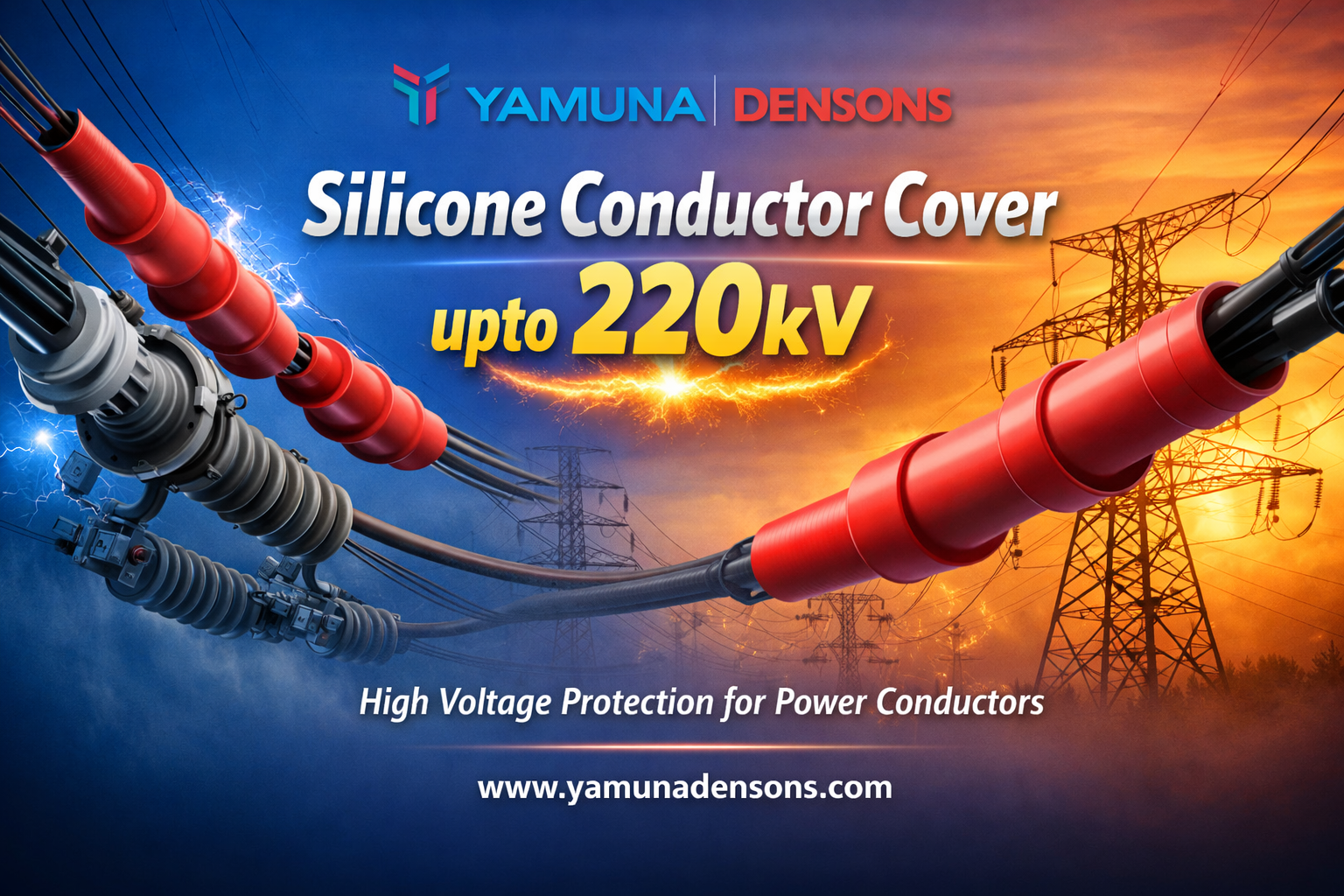
To protect these conductors and provide reliable insulation, Silicone Conductor Cover upto 220 kV is widely used. While acting as a protective insulating layer, this cover has many benefits and is used for heavy-duty transmission cables.
Here are the basic characteristics of silicone conductor cover upto 220 kV, which makes it suitable for high voltage transmissions:
High dielectric strength
The dielectric strength, which is the essential parameter for an insulating medium, is quite high for silicone covers. According to ASTM D 2671, the standard is set above 10 kV/mm.
UV and Weather Resistance
As the high-voltage conductors are often exposed to direct sunlight, they can deform the line. The silicone cover is made to resist deformation caused by weather elements, including harsh sunlight.
Hydrophobic Surface
As rain and high humidity can cause leakage, the surface of the cover is hydrophobic. Water bends or rolls off the surface to avoid leaking.
The typical applications of silicone cover are in overhead distribution and transmission lines, railway electrification, and areas with dense vegetation. By using it, the utility companies avoid frequent maintenance and failures caused by environmental factors. It increases the reliability of transmission networks and improves the operational safety in congested areas. An important thing to consider is that even though it is used on lines up to 220 kV, a silicone conductor cover is considered protective insulation, not a substitute for fully insulated high-voltage cable systems. Its primary role is to minimize accidental contact and flashover and not replace insulation.
The top benefits of silicone conductor cover upto 220 kV are:
● It provides an insulating shield to cover the conductors from accidental contact with tree branches, structures, or construction equipment.
● It helps prevent faults caused by vegetation, wind-blown debris, or wildlife.
● Offers an additional level of protection in areas where transmission lines pass through forests or plantations.
● They are designed with a slit or wrap-around structure, which makes installation easier.
● They can withstand high heat generated during electrical conduction without degrading the material composition.
With the rise in electrical infrastructure and demand for continuous power supply, the utility companies are laying out transmission lines of high voltage in large numbers. Their safety and security are enhanced by silicone conductor cover upto 220 kV. Its dielectric strength, mechanical stability and thermal stability are the reasons why it is so popular. It benefits by reducing fault occurrence and enhancing durability in harsh outdoor conditions.
Silicone Conductor Cover upto 220kV Medium Voltage Conductor Cover Crimping type Center Palm Lug Silicone Cold Shrink Tube with Mastic


