

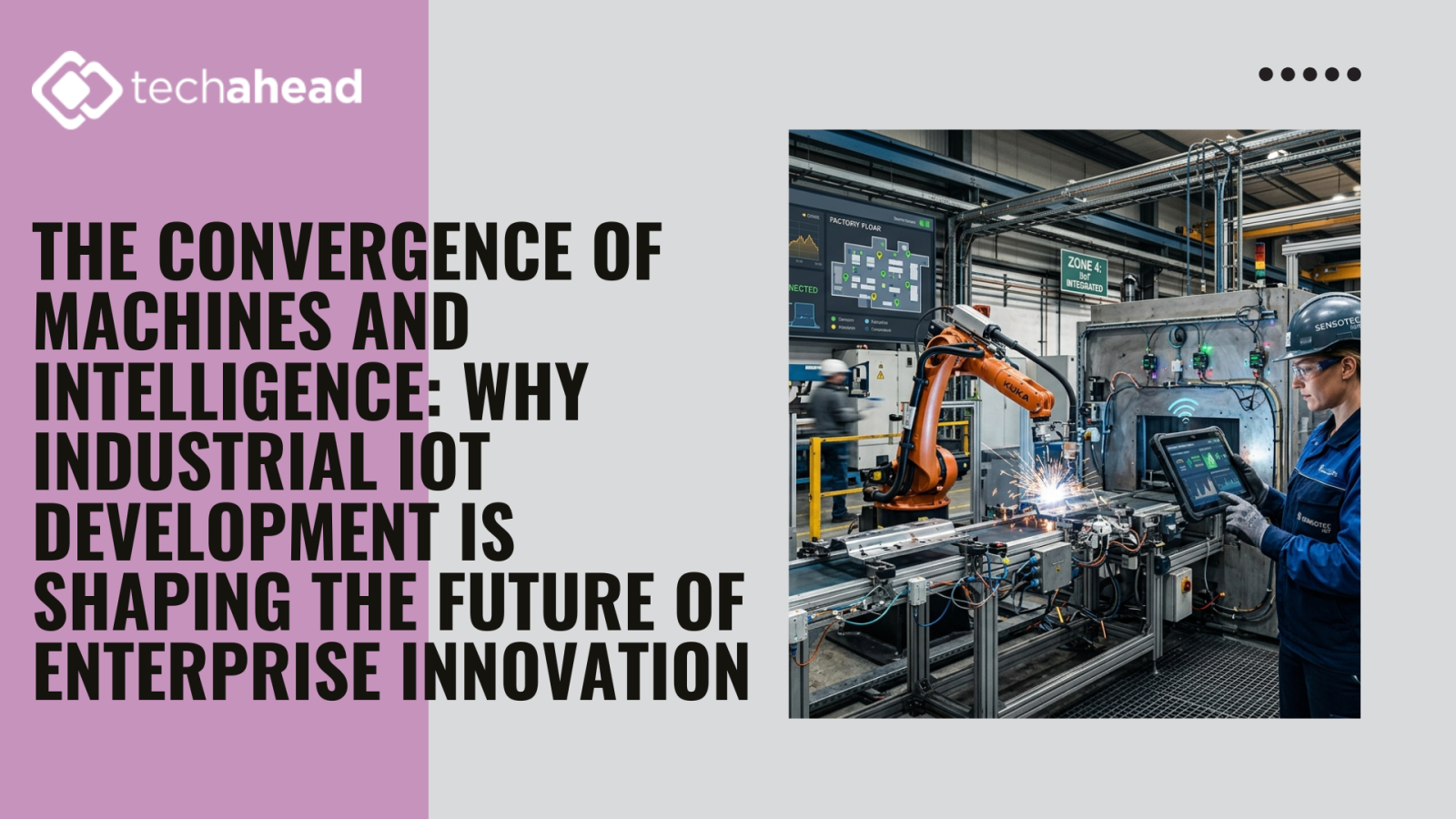
Industrial technology is entering a transformative phase where machines are no longer isolated assets but active participants in intelligent digital ecosystems. From manufacturing plants and logistics hubs to power grids and transportation networks, industrial infrastructure is becoming increasingly connected, responsive, and data-driven.
At the center of this transformation is Industrial IoT Development, which enables physical assets such as machines, sensors, and industrial systems to communicate continuously through digital networks. These networks capture massive volumes of operational data that reveal insights about performance, efficiency, and system health.
However, the real breakthrough occurs when this data is analyzed through advanced Enterprise AI Solutions capable of detecting patterns, predicting outcomes, and guiding operational decisions. Together, these technologies are redefining how organizations operate, compete, and innovate in the modern industrial landscape.
As global industries move toward automation, resilience, and sustainability, the integration of connected systems and artificial intelligence is rapidly becoming the foundation of the next industrial era.
Understanding the Industrial IoT Revolution
Industrial environments have historically relied on machines that operate independently, with limited connectivity and minimal data sharing. While these systems were effective in traditional production environments, they lack the visibility and intelligence required for modern operations.
Industrial IoT Development addresses this limitation by embedding sensors and connectivity into industrial assets. These sensors capture data related to machine performance, environmental conditions, operational efficiency, and production processes.
The data is transmitted through secure communication networks to centralized or edge-based platforms where it can be analyzed and interpreted.
Unlike consumer IoT devices, industrial IoT systems must operate in highly demanding environments. They require robust architectures capable of handling large volumes of data, ensuring system reliability, and maintaining strict security standards.
As a result, successful industrial IoT implementations depend on carefully designed infrastructure that integrates connectivity, device management, and data analytics.
The Intelligence Layer: Enterprise AI
While connected devices generate enormous quantities of operational data, extracting actionable insights requires sophisticated analytical capabilities.
This is where Enterprise AI Solutions become essential.
Artificial intelligence platforms analyze sensor data to identify patterns, detect anomalies, and predict operational outcomes. Machine learning algorithms continuously improve as they process new data, enabling industrial systems to become smarter over time.
When integrated with Industrial IoT Development, AI can perform tasks such as forecasting equipment failures, optimizing production schedules, and identifying inefficiencies within complex industrial workflows.
Instead of relying solely on historical reports, decision-makers gain real-time insights that allow them to respond quickly to operational challenges.
This shift from reactive management to predictive intelligence represents a fundamental change in how industrial organizations operate.
Real-Time Visibility Across Industrial Operations
One of the most significant benefits of connected industrial systems is the ability to monitor operations in real time.
Through Industrial IoT Development, organizations can track the status of machines, production lines, and infrastructure assets continuously. Data from sensors provides detailed insights into operational conditions, including equipment performance, environmental variables, and process efficiency.
Managers can access dashboards that display live operational data across multiple facilities. If a machine begins to operate outside optimal parameters, alerts can be triggered instantly.
When this data is analyzed using Enterprise AI Solutions, organizations gain predictive insights that allow them to address potential issues before they escalate into costly failures.
This level of operational visibility dramatically improves efficiency and reduces downtime.
Predictive Maintenance and Asset Optimization
Equipment failures are among the most expensive challenges faced by industrial organizations. Unexpected breakdowns can halt production, disrupt supply chains, and generate significant repair costs.
Traditional maintenance strategies often rely on fixed schedules or reactive repairs. However, these approaches fail to account for the actual condition of equipment.
Industrial IoT Development enables predictive maintenance by continuously monitoring the health of machines through connected sensors.
AI-powered Enterprise AI Solutions analyze this sensor data to detect early warning signs of mechanical issues. Subtle changes in vibration patterns, temperature fluctuations, or energy consumption can indicate potential failures long before they occur.
By identifying these signals early, organizations can perform maintenance at the optimal time, minimizing downtime and extending the lifespan of industrial assets.
Predictive maintenance not only reduces costs but also improves operational reliability across entire facilities.
Enhancing Supply Chain Intelligence
Industrial operations are deeply interconnected with global supply chains that involve multiple stakeholders, transportation networks, and logistics systems.
Through Industrial IoT Development, organizations can monitor shipments, inventory levels, and transportation conditions in real time. Sensors placed on containers, vehicles, and warehouse equipment provide continuous visibility into supply chain operations.
When this data is analyzed through Enterprise AI Solutions, companies gain the ability to anticipate disruptions and optimize logistics strategies.
AI algorithms can identify patterns that predict delays, recommend alternative routes, and optimize inventory levels across distribution networks.
This level of intelligence allows organizations to build more resilient supply chains capable of adapting to changing market conditions.
Sustainability and Environmental Monitoring
Environmental sustainability has become a major priority for industrial organizations worldwide. Governments, investors, and consumers increasingly expect companies to reduce emissions and operate more responsibly.
Connected sensors deployed through Industrial IoT Development enable organizations to monitor environmental conditions across their facilities. These sensors track variables such as air quality, water usage, energy consumption, and emissions levels.
AI-driven Enterprise AI Solutions analyze this data to identify opportunities for reducing environmental impact. For example, AI can recommend adjustments to production processes that minimize waste or optimize energy usage.
These insights help organizations achieve sustainability goals while also reducing operational costs.
The Role of Edge Computing in Industrial Systems
As industrial networks expand, organizations are increasingly adopting edge computing technologies.
Instead of sending all sensor data to centralized cloud platforms, edge systems process information directly on devices or local gateways. This approach reduces latency and enables faster decision-making.
Through modern Industrial IoT Development, edge devices can run AI models locally, allowing Enterprise AI Solutions to analyze data in real time.
This capability is especially important in environments where immediate responses are critical, such as manufacturing lines, energy systems, and transportation infrastructure.
Edge intelligence ensures that industrial systems remain responsive even when network connectivity is limited.
Challenges in Implementing Intelligent Industrial Systems
Despite the enormous potential of connected technologies, implementing industrial intelligence requires overcoming several challenges.
Organizations must integrate diverse systems and data sources while maintaining strong cybersecurity protections. Industrial networks often include thousands of connected devices, each of which must be managed and secured.
Successful Industrial IoT Development initiatives require scalable architectures capable of supporting large device ecosystems and high data volumes.
At the same time, Enterprise AI Solutions must be trained using high-quality data to ensure accurate predictions and reliable decision-making.
Organizations that invest in strong data governance and robust infrastructure are best positioned to unlock the full value of industrial intelligence.
Conclusion
The industrial world is entering a new era defined by connectivity, intelligence, and automation. Machines, sensors, and infrastructure systems are no longer isolated components but part of interconnected digital ecosystems capable of generating valuable insights.
Through Industrial IoT Development, organizations gain real-time visibility into their operations, enabling them to monitor performance, predict equipment failures, and optimize workflows.
When combined with powerful Enterprise AI Solutions, these connected systems transform raw data into strategic intelligence that drives smarter decisions.
The companies that successfully integrate these technologies will build more resilient, efficient, and sustainable operations. As industrial ecosystems continue to evolve, the convergence of connected machines and artificial intelligence will define the future of enterprise innovation.


