Notifications


9 minutes, 6 seconds
-54 Views 0 Comments 0 Likes 0 Reviews
Planning a trip to the crossroads of Europe and Asia? Whether you are drawn by the hot air balloons of Cappadocia, the bustling Grand Bazaar of Istanbul, or strategic business opportunities in Ankara, understanding the entry requirements is your first step. For Australians, the process is now digitized, making it easier than ever to secure your travel authorization.

In this guide, we break down everything you need to know about the Turkey e-Visa for Australian passport holders, along with essential travel tips for your stay.
Yes. Australian citizens are required to hold a valid visa to enter Turkey for both tourism and business purposes. Fortunately, Australia is part of the e-Visa program, which allows travelers to skip long consulate queues and physical paperwork. The e-Visa acts as a digital permit that is linked to your passport electronically.
For Australians, the e-Visa is generally issued as a Multiple-Entry Visa. This is ideal for those who might want to hop over to neighboring Greek islands or European countries and return to Turkey during their trip.
Purpose: Tourism or Business/Trade.
Stay Duration: Up to 90 days.
Validity: The visa is valid for a total of 180 days from the date of issuance.
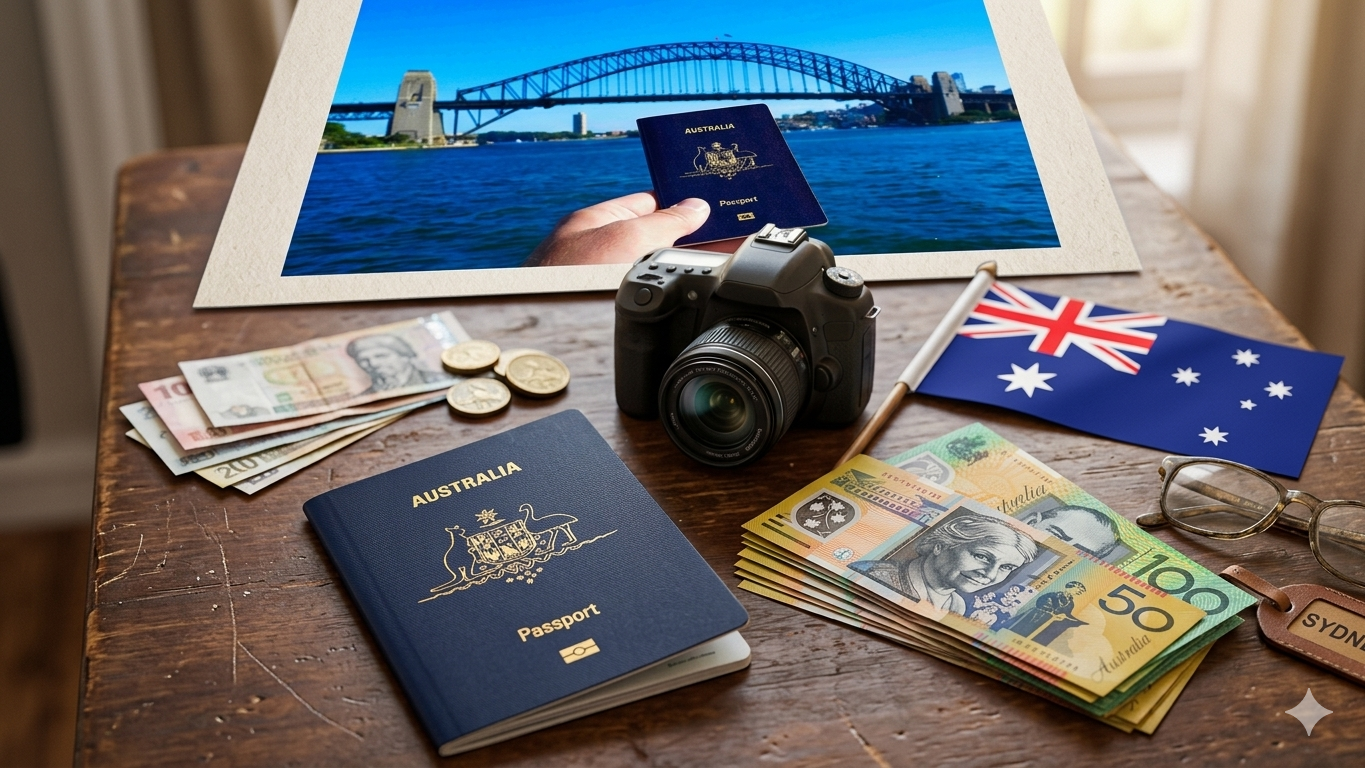
To ensure a smooth application, for Turkey e-visa online :
Original Passport: Must be valid for at least 6 months beyond your planned date of arrival in Turkey.
Email Address: A functional email to receive your approved PDF visa.
Payment Method: A valid Credit or Debit card (Visa, Mastercard, or UnionPay) for the processing fees.
Timing is everything when planning an international getaway. Depending on your urgency, you can choose from three main processing speeds:
Standard Processing: 1 - 2 Working Days (Best for early planners).
Rush Processing: 6 - 12 Hours (Perfect for those traveling tomorrow).
Super Rush Processing: 1 Hour (The "emergency" option for last-minute flyers).
Absolutely. The Turkey e-Visa covers both "Tourist" and "Business" categories. If you are attending a conference, meeting with suppliers, or exploring trade opportunities, the e-Visa is the correct document. However, please note that it does not permit you to take up local employment or study in a Turkish university; those require a different sticker visa from the embassy.
While Turkey is increasingly digital, carrying some Turkish Lira (TRY) is essential. We recommend carrying roughly 500 to 1,000 TRY in small denominations for immediate expenses like taxis, small cafes, or tips. For major shopping at the Grand Bazaar, cash often helps you negotiate a better "cash discount." Avoid exchanging large amounts at the airport, as rates are typically better in city centers.
Yes, most Australian cards (Visa and Mastercard) work seamlessly in Turkey. Contactless payment is widely accepted in supermarkets, malls, and restaurants in major cities like Istanbul and Antalya.
Travel Tip: Use a card like Wise or Revolut to avoid high currency conversion fees.
Important: Always choose to pay in Turkish Lira (TRY) rather than AUD if the terminal asks, as your bank's exchange rate is almost always better than the merchant's.
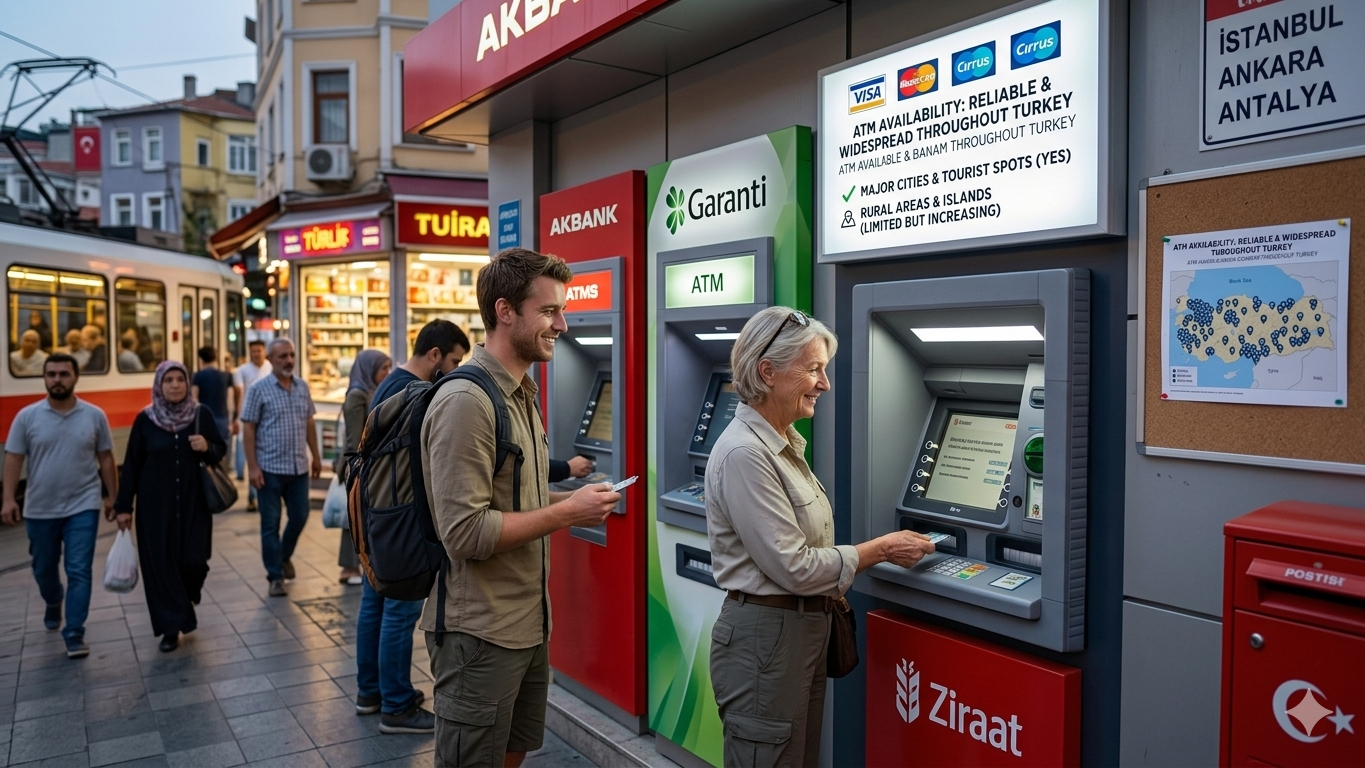
ATMs (known locally as Bankamatik) are everywhere—from airports and metro stations to small coastal towns. Look for reputable banks like Ziraat Bank, VakıfBank, or Garanti BBVA. Most have an English language option. Be aware that some private ATMs may charge a "convenience fee," so state-owned banks are often the cheaper choice for international withdrawals.
For Australians, getting a local SIM is highly recommended to avoid massive roaming charges. You can buy a "Tourist Welcome Pack" from providers like Turkcell, Vodafone, or Türk Telekom.
Where to buy: They are available at the airport, though city shops are cheaper.
What you need: You must show your original passport to register the SIM card.
eSIM Option: If your phone supports it, you can purchase an eSIM online before you even land for instant connectivity.
Turkey has excellent internet infrastructure. Free Wi-Fi is common in hotels, cafes, and even some public parks or intercity buses. Istanbul Airport offers 1 hour of free Wi-Fi via SMS or passport kiosks. However, for reliable maps and translation on the go, a local data plan is much more convenient than hunting for "Free Wi-Fi" stickers.
Turkey uses Type F (Schuko) and Type C power plugs. These are the standard European two-round-pin plugs.
For Australians: You will definitely need a travel adapter, as Australia uses Type I (three flat pins).
Voltage: Turkey operates on 220V/50Hz, which is compatible with Australian devices (230V), so you won't need a voltage converter—just the plug adapter.
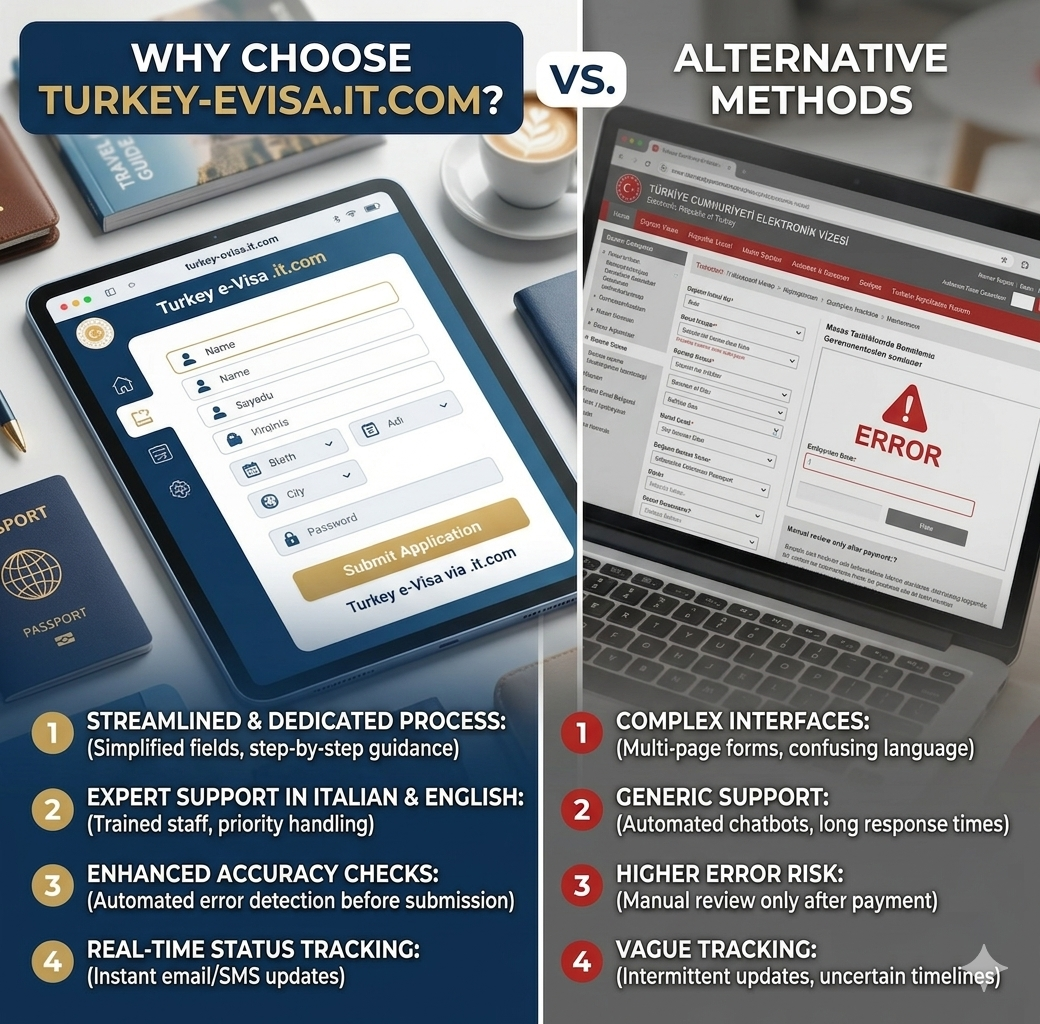
While there are many ways to apply, choosing an expert agent ensures your trip starts without a hitch. Here’s why travelers trust turkey-evisa.it.com:
Error-Free Applications: Our specialists review every form to catch typos or passport number errors that lead to rejections.
24/7 Support: Whether it’s 2 AM in Sydney or midday in Istanbul, our team is available via Live Chat and WhatsApp.
Simplified Document Uploads: We handle the formatting and verification of your files.
Instant Recovery: Lost your email? We can recover your visa using just your passport information.
Q: Do I need to print my e-Visa?
A: We highly recommend keeping a printed copy or a saved PDF on your phone to avoid delays during potential system outages.
Q: What if my application is rejected?
A: Rejections are rare with expert review. If it happens, we help you identify the reason and guide you on the next steps.
Q: Can I extend my 90-day stay while in Turkey?
A: No, e-Visas cannot be extended within the country. You must exit and re-apply or visit a local Migration Office for a residence permit.
Before you head to the airport, ensure you have your Valid Passport, Printed e-Visa, Travel Adapter, and Proof of Travel Insurance. Turkey is a welcoming land of rich history and vibrant culture—don't let a paperwork error stand in your way.
#TurkeyVisa #TurkeyVisaOnline #TurkeyTravelVisa #TurkeyVisaGuide


