Notifications

11 minutes, 37 seconds
-53 Views 0 Comments 0 Likes 0 Reviews
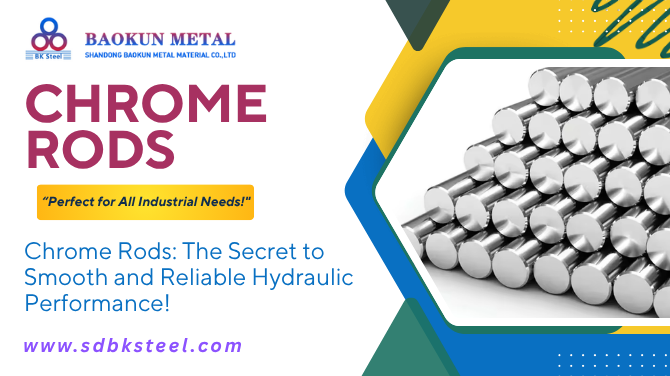
In the world of industrial machinery and automation, hydraulic systems are the lifeblood that powers everything from construction equipment and manufacturing lines to agricultural machinery and marine applications. The efficiency, reliability, and longevity of these systems depend on the quality of their components. Among these, Chrome Rods play a pivotal role in ensuring smooth and reliable hydraulic performance.
What Are Chrome Rods?
Chrome Rods are steel rods that have been coated with a layer of hard chromium through an electroplating process. This layer is typically between 20 to 50 microns thick and is designed to provide exceptional hardness, wear resistance, and corrosion protection. The rods are usually made from high-strength steel, such as CK45, 42CrMo4, or stainless steel, and are precision-ground to tight tolerances before plating.
Key Features
The Heart of the Hydraulic Cylinder
In a hydraulic cylinder, the piston rod is subjected to constant movement, high pressures, and exposure to harsh environments. The rod must maintain a perfect seal with the cylinder, resist bending and wear, and operate smoothly over millions of cycles. Chrome Rods are engineered to meet these demands.
Key Functions
1. The Electroplating Process
Chrome plating involves immersing the steel rod in a chromic acid solution and applying an electric current. Chromium ions are deposited onto the rod’s surface, forming a dense, hard layer. The process is carefully controlled to achieve uniform thickness and optimal adhesion.
2. Benefits of Chrome Plating
1. Material Selection
2. Chrome Layer Thickness
The optimal thickness depends on the application. Standard thickness ranges from 20 to 50 microns, but thicker layers may be specified for extreme wear or corrosion conditions.
3. Surface Finish
A mirror-like finish (Ra ≤ 0.2 μm) is essential for minimizing friction and seal wear.
4. Dimensional Tolerances
Tight tolerances ensure proper fit and function within the hydraulic cylinder.
5. Customization
At Shandong Baokun Metal Material Co. Ltd, we offer custom diameters, lengths, and surface treatments to meet specific application requirements.
1. International Standards
Our Chrome Rods comply with major international standards, including:
2. Testing and Inspection
Every rod undergoes rigorous quality control, including:
1. Regular Inspection
Check rods for signs of wear, corrosion, or damage. Early detection can prevent costly failures.
2. Proper Lubrication
Use compatible hydraulic fluids and lubricants to minimize friction and wear.
3. Seal Maintenance
Replace seals at recommended intervals to maintain system integrity.
4. Cleaning
Keep rods clean and free from contaminants that can cause abrasion or corrosion.
Chrome Rods are not just a component—they are the foundation of smooth, reliable, and long-lasting hydraulic systems. Their unique combination of hardness, wear resistance, corrosion protection, and precision makes them essential for demanding industrial applications.
Q1: What is the main advantage of Chrome Rods in hydraulic systems?
A: The primary advantage is their exceptional wear and corrosion resistance, which extends the life of both the rod and the hydraulic seals, ensuring reliable and efficient system operation.
Q2: How thick is the chrome layer on Chrome Rods?
A: The chrome layer typically ranges from 20 to 50 microns, but can be customized for specific applications.
Q3: Can Chrome Rods be used in corrosive environments?
A: Yes, the chrome layer provides excellent protection against rust and corrosion, making these rods suitable for marine, offshore, and chemical processing applications.
Q4: What materials are used for the base rod?
A: Common materials include CK45, 42CrMo4, and stainless steel, chosen based on the required strength, toughness, and corrosion resistance.
Q5: How are Chrome Rods maintained?
A: Regular inspection, proper lubrication, timely seal replacement, and keeping the rods clean are key to maximizing their service life.
Q6: Are Chrome Rods compatible with all hydraulic cylinders?
A: Yes, they are designed to fit standard hydraulic cylinder designs, but custom sizes and finishes are available for specialized applications.
Q7: What surface finish is recommended for hydraulic applications?
A: A surface roughness of Ra ≤ 0.2 μm is ideal for minimizing friction and seal wear.
Q8: How does chrome plating improve fatigue life?
A: The hard chrome layer reduces the initiation and propagation of surface cracks, enhancing the rod’s resistance to fatigue failure.
Q9: Can I order custom sizes or lengths?
A: Absolutely. At Shandong Baokun Metal Material Co., Ltd., we offer custom diameters, lengths, and surface treatments to meet your specific needs.
Q10: Why choose Shandong Baokun Metal Material Co. Ltd for Chrome Rods?
A: We provide high-quality, customizable rods backed by advanced manufacturing, rigorous quality control, and expert technical support.


