Notifications

9 minutes, 22 seconds
-434 Views 0 Comments 0 Likes 0 Reviews
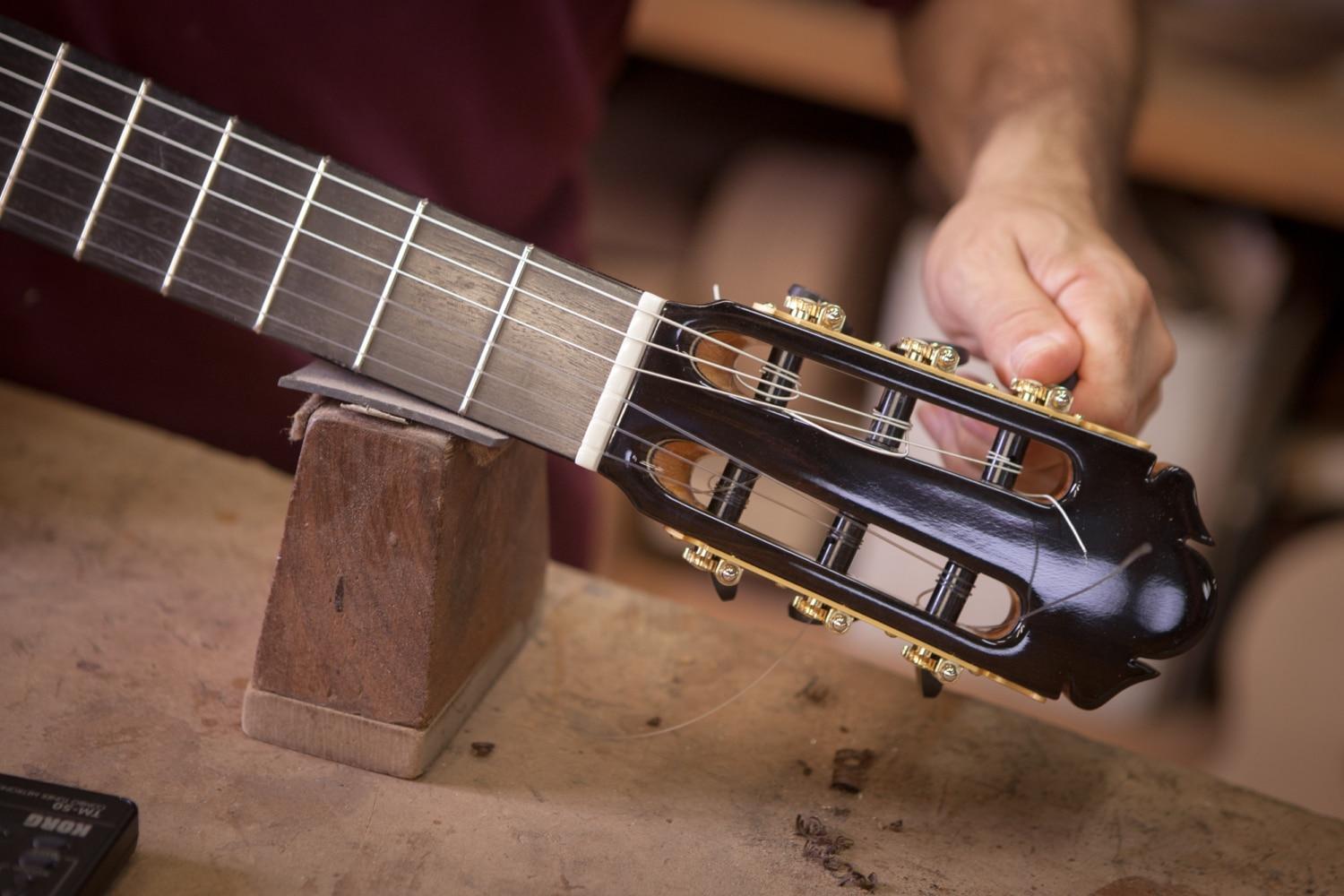
Guitar Luthier Berga represents the kind of workshop where time seems to slow down and the smell of cut wood, natural varnish, and hot hide glue tells you that real handcraft is still alive. In a world dominated by CNC machines and high-speed production lines, Berga’s approach is deliberately slow, attentive, and deeply personal. Every instrument is conceived as a one‑off collaboration between luthier and player, with decisions about tone, feel, and aesthetics made carefully rather than by formula. This philosophy places Berga firmly in the lineage of traditional European guitar makers, yet the work remains fully aware of the demands and expectations of present‑day musicians.
Rooted in Traditional European Luthiery
The foundation of Berga’s work lies in classical European luthiery: solera-based building, Spanish heel neck joints, and hand‑graduated soundboards that echo the methods of 19th and early 20th century masters. Instead of relying on prefabricated kits or generic patterns, the workshop maintains its own molds, templates, and carving schemes, refined slowly over years of experimentation. The guitar is approached as a unified system where top, back, sides, neck, and hardware all interact, and this holistic mindset is very much a product of the older school of craft. Berga’s instruments, whether classical, flamenco, or steel‑string, retain that traditional emphasis on balance, projection, and a singing, vocal quality in the midrange.
Selecting Tonewoods with an Ear, Not a Spreadsheet
In many modern factories, wood selection is a logistical problem, driven by cost, supply chains, and standardization. Berga reverses this logic by choosing tonewoods as a musician would choose notes: by ear, feel, and intuition. Tops are usually quarter‑sawn spruce or cedar, inspected for grain straightness, stiffness along and across the grain, and then tap‑tested to hear how they ring. Backs and sides might be Indian rosewood, maple, cypress, mahogany, or more unusual species, selected not just for visual figure but for how they complement a player’s style—lush and sustaining for classical repertoire, or quick and dry for flamenco compás. Air‑drying, rather than aggressive kiln processing, helps these woods settle and age gracefully, reinforcing the workshop’s long‑term view of stability and tone.
Hand Voicing: Shaping the Guitar’s Personality
A key aspect of Berga’s artisan approach is top and body voicing, the subtle process through which wood thickness and bracing are adjusted to fine‑tune the instrument’s response. Rather than copying a fixed bracing diagram, the luthier responds directly to each piece of wood, shaving braces, feathering edges, and re‑tapping the plates until the soundboard resonates at the desired pitch and with the right character. For a concert classical guitar, the goal might be long sustain, wide dynamic range, and color changes between ponticello and tasto positions. For a flamenco guitar, the same craft is pushed in another direction: quick attack, shorter decay, and a slightly more percussive, “speaking” midrange. This hand voicing gives each Berga instrument a distinctive personality that no automated router can reproduce.
Ergonomics and Playability for Today’s Musicians
While the building methods are traditional, Berga pays close attention to the ergonomic needs of contemporary players who may spend hours recording, touring, or streaming online. Neck profiles are not copied blindly from old plans; they are shaped and reshaped until the curvature, depth, and shoulder feel natural for the player’s hand. Nut width, scale length, fret size, and fingerboard radius are chosen according to playing style—whether that is intricate fingerstyle, aggressive rasgueado, or hybrid plectrum and finger work. The final setup, including action height, relief, and intonation, is treated as the last stage of craftsmanship rather than an afterthought, ensuring the instrument invites rather than resists expressive playing.
Finishing Techniques That Respect Tone and Environment
Finishing is another area where Berga’s workshop blends heritage with modern sensibility. Traditional French polish with shellac is often favored for classical and flamenco instruments, because its ultra‑thin, hand‑rubbed layers protect the wood while allowing the soundboard to vibrate freely. On steel‑string or stage‑oriented guitars, carefully applied modern lacquers or oil‑varnish combinations may be used to increase durability while still keeping the coating as thin and acoustically transparent as possible. Wherever possible, the workshop chooses low‑toxicity products and controlled application methods, recognizing both the health of the luthier and the environmental impact of solvents. The result is a finish that enhances the wood’s natural beauty without smothering its sound.
Balancing Tradition with Subtle Innovation
Preserving artisan guitar‑making in the modern era does not mean rejecting every new idea. In Berga’s shop, innovation appears where it serves tone, stability, or the musician’s practical needs. This might include discreet carbon‑fiber reinforcement in the neck to resist climate changes, compensated saddles for more accurate intonation, or carefully integrated pickup systems for players who need a reliable stage sound without sacrificing acoustic integrity. Design tweaks—such as slightly altered body dimensions, soundport experiments, or modified bracing stiffness—are tested slowly, observed over years rather than product cycles. In this way, innovation is evolutionary and respectful, not driven by marketing trends.
A Human Connection in a Digital World
Perhaps the most important way Berga preserves artisan guitar‑making is through the direct relationship with musicians. Instead of clicking “add to cart,” players engage in conversations about repertoire, venues, and personal taste. They might visit the workshop, feel unfinished necks, hear different tops tapped side by side, and follow the build process through photos or visits. This dialogue influences countless small decisions, and when the finished guitar finally leaves the bench, it carries the story of both maker and player. In an era where many instruments are anonymous products, this human connection turns each Berga guitar into a companion with history, intention, and emotional weight.
Safeguarding a Living Craft for the Future
Ultimately, guitar luthier Berga stands as part of a broader effort to keep fine luthiery a living, evolving craft rather than a nostalgic museum piece. Apprenticeships, documentation of techniques, and participation in festivals or exhibitions all help transmit this knowledge to a new generation. At the same time, the workshop demonstrates that small‑scale, high‑skill craft can still thrive alongside global manufacturing, offering musicians something they cannot get from even the best factory line: an instrument shaped by a specific pair of hands, with a voice that grows deeper and more personal over time. In doing so, Berga helps ensure that the art of the handmade guitar remains vibrant in the modern era, not as a luxury curiosity but as a vital part of musical culture.