Notifications

5 minutes, 31 seconds
-36 Views 0 Comments 0 Likes 0 Reviews
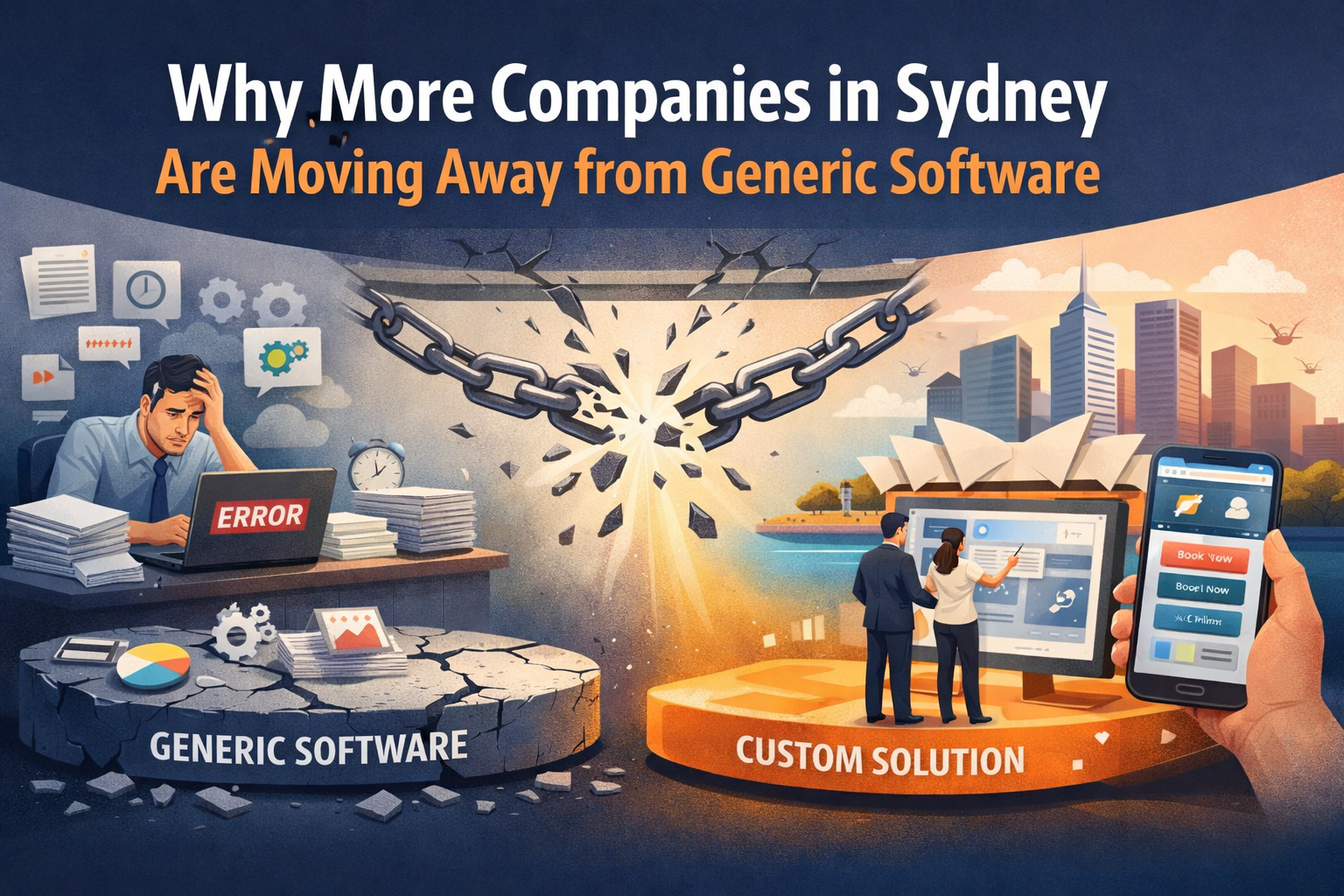
Generic software functions until it breaks down.
The majority of firms begin with whatever tool is most affordable and simple to set up. Spreadsheets, commercial platforms, and a variety of SaaS subscriptions. It completes the task early on. But as the company expands, those tools begin to cause more issues than they resolve.
Teams create workarounds by hand. Data is stored in disparate, non-communicating systems. Employees waste time on jobs that ought to have been automated two years ago.
Many firms in Sydney are currently attempting to break free from this cycle.
The main problem with generic software is that it is designed for a large market. This means it manages common use cases rather effectively and specific ones poorly.
You will continue to encounter that ceiling if your company has unique procedures, stringent compliance regulations, or a client journey that deviates from a typical template. To fill in the gaps, you could add more tools, but doing so only increases complexity and expense.
The question eventually arises: are we managing our business, or are we managing our software?
The day-to-day becomes easier when software is designed around your real processes. Repetitive tasks get automated. Systems connect properly. Reports extract actual data without the need for manual compilation.
It also means the software can change when your business changes. New locations, more users, different processes. A properly built system handles that without needing to start from scratch.
For businesses with specific operational needs, working with a team that does bespoke software development tends to make more sense than continuing to patch together tools that were never designed to work together.
Many companies treat mobile as a distinct project. But if your employees or clients use their phones frequently, it should be part of your broader software plan.
Your backend services can be directly connected to a well-developed mobile application. Real-time record updates are possible for field teams. Customers don't need to call in to make reservations, pay, or get assistance. The app and the underlying software need to be built together for that kind of integration to work properly.
Finding app creators in Sydney who handle both the design and technical build under one roof matters here. When mobile development is handed off to a separate agency, things tend to get disjointed.
Custom software is not necessary for every business. But there are some clear signs it's worth looking into.
Real warning signs include your staff spending a lot of time entering data by hand, paying for several tools that still leave gaps, or your current system not keeping up with company growth.
Cost over time is the other indicator. At first, off-the-shelf software seems more affordable. But licensing fees mount up, workarounds cost labor hours, and eventually you might have to rebuild anyway. A custom build requires a bigger initial investment, but the long-term numbers frequently look different.
Technical capability is the first thing to assess. But it's worthwhile to go beyond that.
Ask about their process. Do they conduct proper discovery before starting development? Do they incorporate testing phases? What happens after launch?
Ask to see actual projects rather than just logos on a client page. Case studies that show the problem, the solution, and the outcome give you a far clearer picture of what a team truly delivers.
The build itself is only part of it. Many projects fail due to gaps in ongoing support and maintenance, so it's worth asking about that upfront as well.
Generic tools have their place, but they have limits. When those limits start costing your business time and money, it's a reasonable point to explore what a purpose-built solution would actually look like. The conversation is usually more straightforward than people expect.
#SoftwareDevelopment custom app development App Developers #CustomSoftwareDevelopment